Explore our pool maintenance guides, practical tips, and useful answers.
Pool Maintenance
17 guides in Pool Maintenance
Latest
17 of 17 guides · Newest first
Can You Shock a Pool Two Days in a Row?
Yes, and fighting algae often takes it. Test first: if chlorine is still at shock level, top it up instead. What repeated shocking does to calcium and stabilizer, and when to stop.
Pool MaintenanceDoes Pool Chlorine Go Bad?
Liquid chlorine weakens month by month, faster in a hot garage; tablets and powders keep for years if dry. Shelf life by product, signs it's gone bad, and a bucket test for old chlorine.
Pool MaintenanceCan You Add Chlorine to a Salt Water Pool?
Yes. A salt pool already runs on chlorine, so adding more is safe. Liquid chlorine is the best choice; cal-hypo and routine tablets cause problems. When and how to boost or shock a salt pool.
Pool MaintenanceCan You Use Water Softener Salt in a Pool?
Plain, additive-free water softener salt works in a salt water pool and often costs less than pool salt. What to check on the bag, crystals vs pellets, and how much to add.
Pool MaintenanceDoes Rain Raise or Lower Pool pH?
Rain is slightly acidic, but it barely moves pool pH. What it really does is dilute chlorine and alkalinity, wash in debris and raise the water level. What to do after a storm.
Pool MaintenanceCan You Use Bleach Instead of Pool Chlorine?
Plain unscented bleach is the same chemical as liquid pool chlorine, just weaker. How much to add by strength, which bleach to avoid, and whether it really saves money.
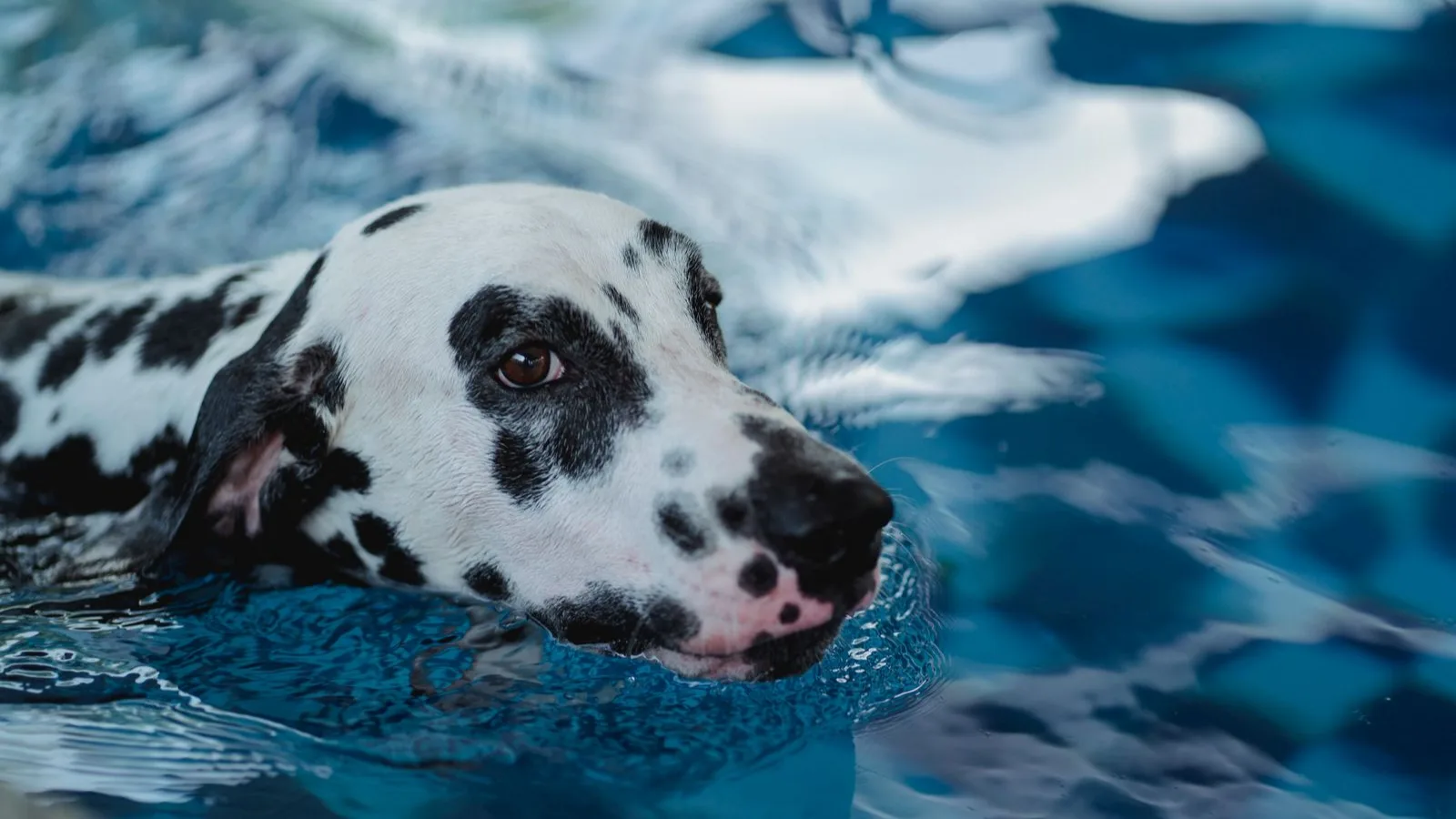
Pool MaintenanceCan Dogs Swim in Chlorine Pools?
Yes, dogs can swim in a properly balanced chlorine pool. Safe chlorine levels, drinking and drowning risks, and what a dog does to your filter, liner and water.
Pool MaintenanceHow Long After Adding Chlorine Can You Swim?
Don't go by the clock: swim once free chlorine is 4 ppm or lower and pH is 7.2–7.8. Typical wait times for every pool chemical, and how to test first.
Pool MaintenanceSalt Water Pool vs Chlorine Pool: Which Is Better?
A salt pool is a chlorine pool with a built-in chlorine maker. Here's how they compare on cost, upkeep, comfort and damage, with a real cost example and conversion steps.
Pool MaintenanceHow to Reduce Calcium Hardness in Pool Water
The only reliable way to lower calcium hardness is replacing water. Here is how much to replace, even with hard tap water, plus RO and how to stop scale meanwhile.
Pool MaintenanceWhat Should the Chlorine Level Be in a Pool?
1–3 ppm free chlorine is only the floor. Your real target depends on stabilizer (CYA). Here is the chart for pools, hot tubs and salt pools, and what to do when it's off.
Pool MaintenanceHow Much Chlorine to Add to a Pool: Dose Chart, Tablets & Shock
Exact chlorine doses per 10,000 gallons for every common product, how much to add each week, how many tablets you need, and how much to shock.
Pool MaintenanceHow to Lower Alkalinity in a Pool (Without Crashing the pH)
The acid-and-aeration method for lowering total alkalinity: correct acid doses, a round-by-round plan, and how to bring pH back up without raising alkalinity again.
Pool MaintenanceHow to Lower Chlorine in a Pool (5 Ways, Fastest First)
Chlorine too high? Five ways to bring it down, fastest first, with real neutralizer doses, a worked example, and when it is safe to swim again.
Pool MaintenanceHow to Raise Free Chlorine in a Pool (and Why It Won't Go Up)
How much chlorine to add for your CYA level, what free, combined and total chlorine mean, and six reasons free chlorine won't go up.
Pool MaintenanceHow to Lower pH in a Pool (Safely, With the Right Dose)
Lower pool pH with muriatic acid or dry acid: the right dose for your volume and alkalinity, safe pouring steps, and how to stop pH from creeping back up.
Pool MaintenanceHow to Raise pH in a Pool (Pick the Right Chemical First)
Raise low pool pH with soda ash, baking soda or aeration, picked by your alkalinity. Safe steps, a worked example, and why pH keeps dropping.
Pool Maintenance