
How to Lower pH in a Pool (Safely, With the Right Dose)
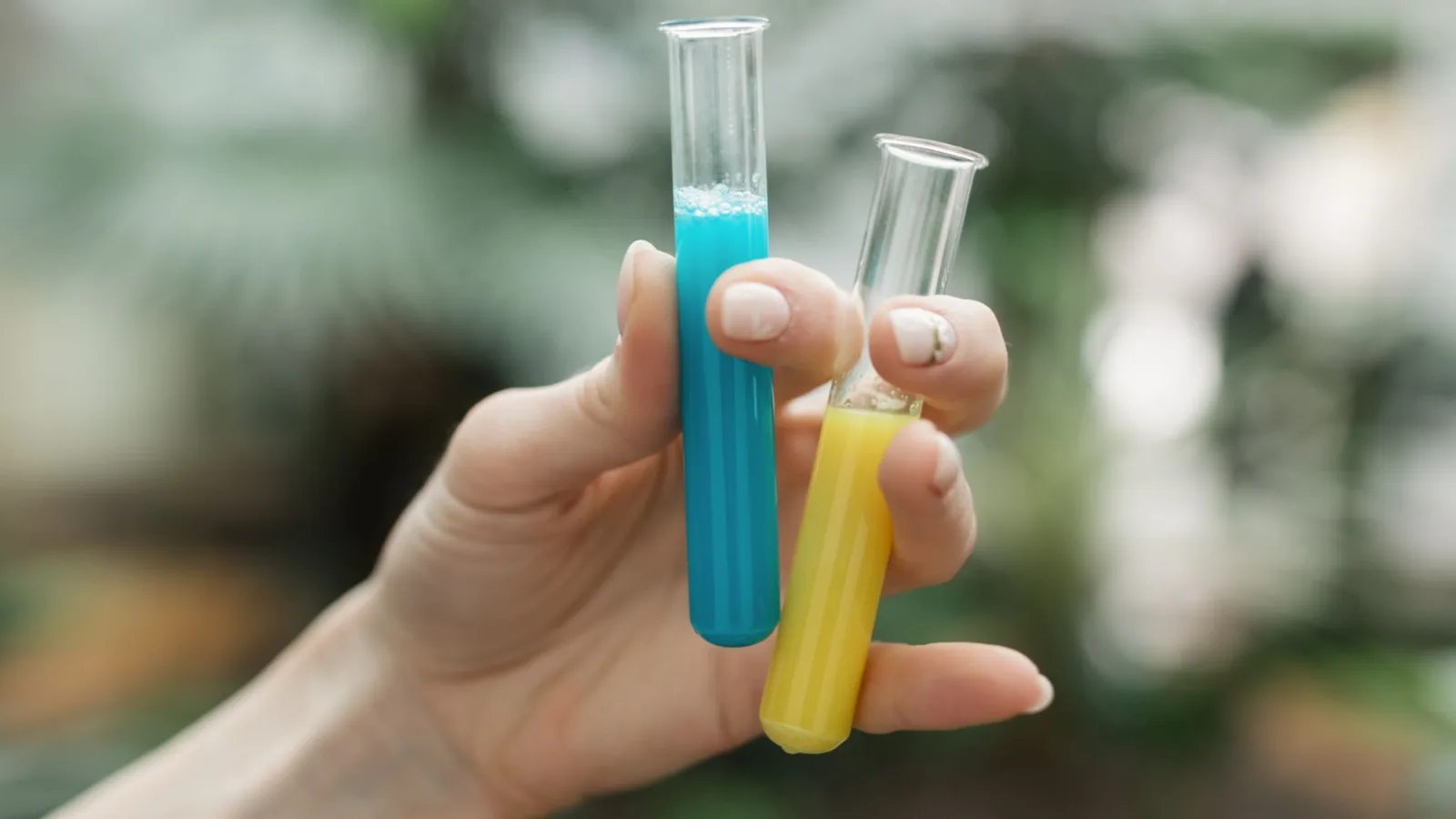
Lower pool pH with muriatic acid or dry acid (sodium bisulfate). The right amount depends on your pool's volume and its total alkalinity. Then:
- Add 75% of the calculated dose with the pump running.
- Wait 30–60 minutes and retest.
- Add the rest only if pH is still above target. Aim for pH 7.4–7.6.
If pH keeps creeping back up, the long-term fix is to lower total alkalinity, not to keep adding acid.
Quick answer: how to lower pH in a pool
- Test pH and total alkalinity (TA).
- Calculate the dose for your gallons and TA with the muriatic acid calculator.
- Measure 75% of that dose into a plastic container.
- Pour slowly into the deep end in front of a return jet, with the pump running.
- Retest after 30–60 minutes of circulation.
- Top up with the remaining 25% only if pH is still high.
When is pool pH too high? (and why it matters)
Pool pH is too high when it reads above 7.8. Aim for 7.4–7.6.
| pH reading | What it means | Action |
|---|---|---|
| Below 7.2 | Too low (acidic) | Raise pH instead |
| 7.2–7.3 | Acceptable, low end | Fine; best before shocking |
| 7.4–7.6 | Ideal | Nothing to do |
| 7.7–7.8 | Acceptable, high end | Lower soon |
| Above 7.8 | Too high | Lower pH now |
Why high pH is a problem:
- Chlorine is weaker: less of it is in its active form at high pH, so it kills germs and algae more slowly.
- Scale forms: calcium scale builds up on tile, heaters and salt cells.
- Water turns cloudy: high pH is a common cause of milky water.
- Eyes and skin get irritated.
The CDC notes that pools with proper chlorine and pH levels are less likely to spread germs.
What lowers pH in a pool?
Two chemicals lower pool pH: muriatic acid (liquid hydrochloric acid) and dry acid (sodium bisulfate). Both also lower total alkalinity a little.
| Muriatic acid (31.45%) | Muriatic acid (14.5%, "low-fume") | Dry acid (sodium bisulfate) | |
|---|---|---|---|
| Form | Liquid | Liquid | Granules |
| Strength per dose | Strongest | About half as strong | Weaker by weight |
| Fumes | Strong; handle outdoors | Fewer | Dust, no fumes |
| Cost | Cheapest | Moderate | Most expensive |
| Side effect | Adds chloride (salt) | Adds chloride | Adds sulfate, which builds up over time |
| Best for | Most pools | Beginners who want easier handling | Small pools, people who avoid liquids |
What does not lower pH:
- Bleach and liquid chlorine: they raise pH slightly.
- Baking soda: it raises alkalinity and pH.
- Heating the pool: warm water releases CO₂, which tends to push pH up.
- Adding fresh water: it only helps if the fill water itself has low pH and low alkalinity.
How to lower pH in a pool (step by step)
Example.
- The pool: Carlos has an 18,000-gallon plaster pool in Phoenix.
- The test: pH 8.0, total alkalinity 110 ppm, CYA 40 ppm.
- The goal: pH 7.5.
(Carlos is an illustrative example; the doses are real calculations.)
Step 1: Test pH and total alkalinity
Test pH and total alkalinity (TA). Alkalinity is the water's buffer: the higher it is, the more acid it takes to move pH. A drop-based test kit is more accurate than strips for pH.
Step 2: Calculate the dose
Carlos's pool needs about:
- 30 fl oz of 31.45% muriatic acid (just under 1 quart), or
- 71 fl oz of 14.5% muriatic acid, or
- 2 lb 9 oz of dry acid.
Our muriatic acid calculator works this out from your gallons, pH, alkalinity and CYA. Not sure of your volume? Use the pool volume calculator.
Step 3: Measure 75% of the dose
Measure about 22 fl oz (75% of 30). Test kits and calculators both have some error, and it is far easier to add a little more acid than to raise pH back up.
Step 4: Pour it safely
- Gear up: wear chemical-splash goggles and acid-resistant gloves, and work outdoors with the wind at your back.
- Dilute (optional): you can dilute the acid in a plastic bucket of pool water first. Always add acid to water, never water to acid.
- Pour: with the pump running, pour slowly into the deep end in front of a return jet, keeping it low to the water to avoid splashing.
- Dry acid: pre-dissolve it in a bucket of water, then pour it the same way.
Step 5: Circulate and retest
- Quick check: run the pump for 30–60 minutes, then retest pH.
- More acid: if you add more, wait at least 4 hours before the next full adjustment, so the water is fully mixed and alkalinity has settled.
Step 6: Top up only if needed
If pH is still above 7.6, add the remaining 25% and retest.
Carlos's pH reached 7.6 after the first 22 oz, so he added a small top-up and landed at 7.5.
How much acid to lower pH by 0.1?
The amount of acid to lower pH depends mostly on total alkalinity. That is why a single rule like "5 oz per 0.1 per 10,000 gallons" can be off by a factor of two or more.
For 10,000 gallons, going from pH 7.8 to 7.7, our carbonate calculation gives:
| Total alkalinity | 31.45% muriatic acid for −0.1 pH |
|---|---|
| 60 ppm | about 1.4 fl oz |
| 80 ppm | about 1.9 fl oz |
| 100 ppm | about 2.4 fl oz |
| 120 ppm | about 2.9 fl oz |
| 150 ppm | about 3.6 fl oz |
How to use these numbers:
- Scale by volume: multiply by your gallons ÷ 10,000.
- Big drops: a bigger drop is not exactly linear, so use the calculator for anything over 0.3.
- Low-alkalinity pools: fixed rules overshoot most in low-alkalinity water. That's another reason to start with 75%.
Why does my pool pH keep going up?
Pool pH rises mainly because carbon dioxide escapes from the water. The higher your total alkalinity, the faster it rises. Carbonic acid leaves the water as CO₂ gas, the same way a soda goes flat, and that pushes pH up.
What speeds up pH rise:
- Water movement: waterfalls, fountains, spa spillovers and air bubblers.
- Salt chlorine generators: the cell's bubbles strip CO₂ from the water.
- High total alkalinity: above about 100 ppm, there is more carbonate to lose CO₂.
- New plaster: fresh plaster releases lime for the first few weeks.
- Chlorine: liquid chlorine and cal-hypo nudge pH up a little each time.
The long-term fix: lower total alkalinity.
- Range: keep TA around 60–80 ppm for most plaster pools with liquid chlorine or a salt system.
- How:
- Lower pH to about 7.0–7.2 with acid.
- Aerate the water (fountains, jets aimed up) to drive pH back up without raising TA.
- Repeat until TA reaches your target.
- More detail: the pool alkalinity calculator shows where you stand.
How to lower pH quickly (and safely)
The fastest safe way to lower pH:
- Pour muriatic acid in front of a return jet with the pump running.
- Retest after 30 minutes.
Don't dump a large dose all at once, and never pour acid into the skimmer.
Pool chemicals send thousands of people to the ER. The CDC estimates that pool chemical injuries led to about 13,508 emergency department visits a year in the U.S. (2015–2017):
- more than a third were children;
- most injuries happened at home.
The CDC's rules:
- Never mix acid and chlorine: this releases toxic chlorine gas. Add them separately, at least 30 minutes apart, and never in the same bucket or feeder.
- Add chemicals to water, never water to chemicals.
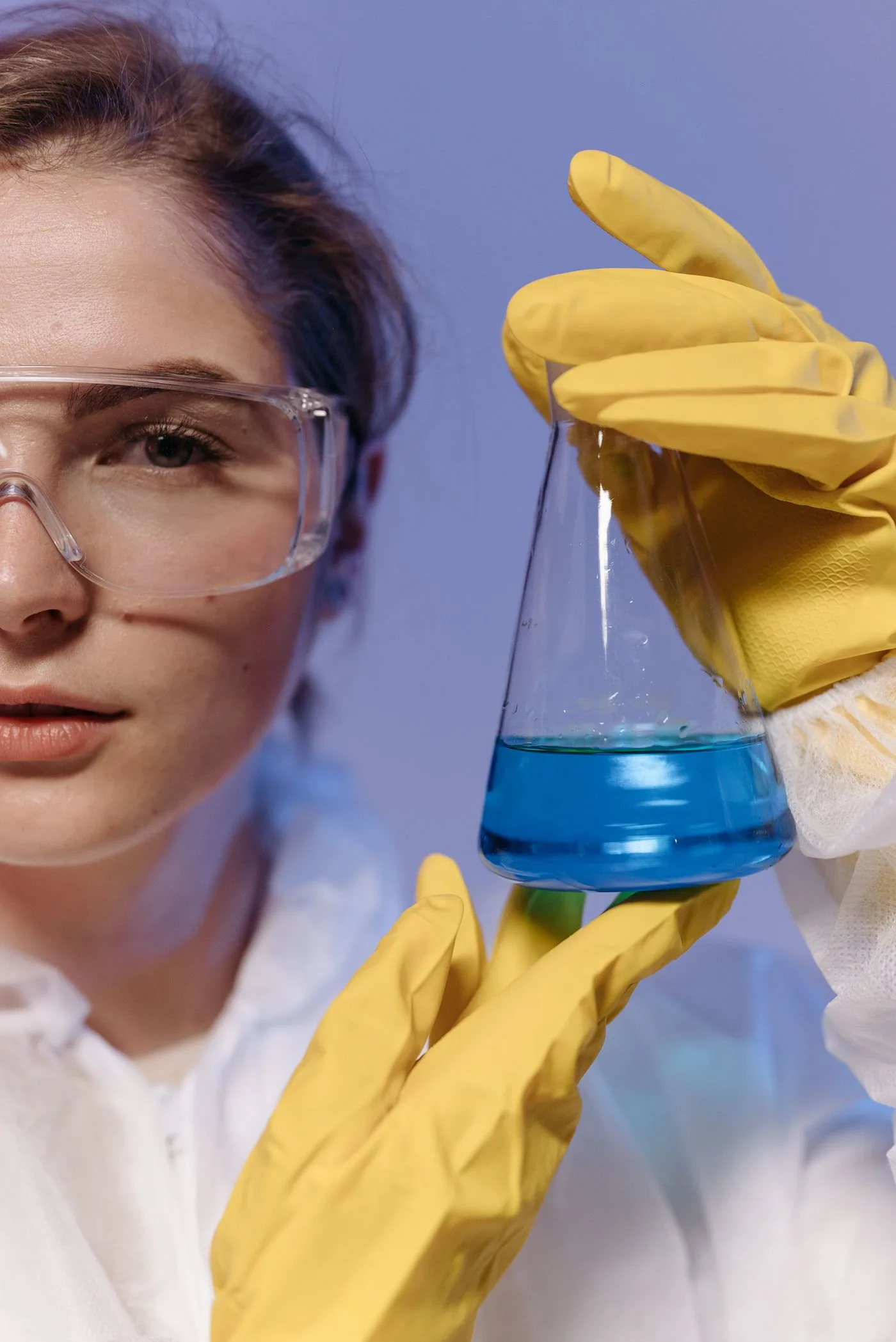
- Wear goggles, gloves and a mask, and work in a well-ventilated area.
- Open one container at a time, and store acid away from chlorine.
How long after adding acid can you swim?
Wait at least 30 minutes after adding muriatic acid with the pump running, and retest first. Swim once pH is back in the 7.2–7.8 range. After a large dose, waiting 1–2 hours gives the water time to mix fully.
Frequently asked questions
Can I lower pool pH without chemicals?
Only slowly. Replacing some water with low-pH, low-alkalinity water helps a little, and lowering alkalinity reduces future pH rise. To actually drop pH in the short term, you need an acid.
Does muriatic acid lower alkalinity too?
Yes. Every dose of acid lowers total alkalinity as well as pH. That's useful when alkalinity is high. If alkalinity is already low, raise it with baking soda after you finish.
Can I use vinegar to lower pool pH?
Not practically. Household vinegar is a weak acid at about 5%, so you would need gallons of it to do the work of a few ounces of muriatic acid. It also adds organic material that uses up chlorine.
Will shock lower my pool pH?
No. Most chlorine shocks, including liquid chlorine and cal-hypo, raise pH slightly. Dichlor and trichlor are slightly acidic, but they add stabilizer, so they're not a good pH tool.
How long does it take to lower pH in a pool?
The acid starts working immediately. With the pump running, the whole pool is mixed in 30–60 minutes for most pools. Large adjustments are best done over a day in two or three doses.
I added too much acid. What now?
Retest first. If pH fell below 7.2, raise it with soda ash. If alkalinity is low too, use baking soda. Aerating the water also raises pH gently. Don't swim until pH is back above 7.2.
The bottom line
To lower pH in a pool:
- Test pH and alkalinity.
- Calculate the dose with your alkalinity, not a fixed rule.
- Add 75% of it in front of a return jet with the pump running.
- Retest after 30–60 minutes.
If pH keeps rising, bring total alkalinity down to about 60–80 ppm. Get your exact dose with the free muriatic acid calculator.
Sources
- CDC, Pool Chemical–Associated Injuries — United States, 2015–2017, MMWR 68(19), May 2019. https://www.cdc.gov/mmwr/volumes/68/wr/mm6819a2.htm
- CDC, Preventing Swimming-related Illnesses. https://www.cdc.gov/healthy-swimming/prevention/index.html
- Doses calculated with Pool Care's free pool calculators (carbonate alkalinity model with CYA correction; 31.45% and 14.5% muriatic acid; 93% sodium bisulfate).

What do you think?
Share your experience, ask a question, or help another reader.
Loading comments…