
Salt Water Pool vs Chlorine Pool: Which Is Better?
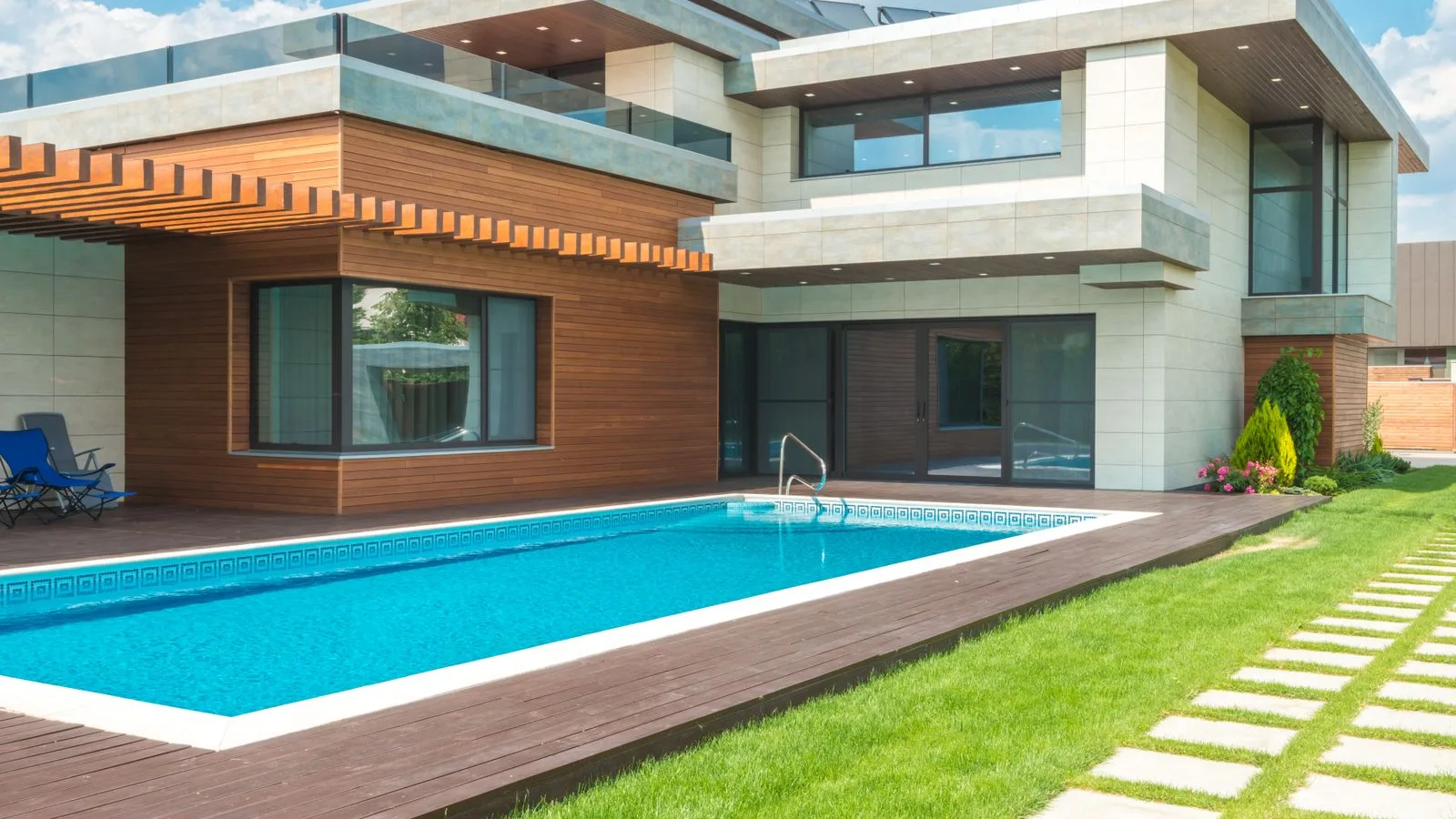
A salt water pool is not chlorine-free. It's a chlorine pool that makes its own chlorine. A salt cell uses electricity to turn dissolved salt into chlorine, so you stop buying and adding chlorine by hand. Salt is better if you want steadier chlorine, softer-feeling water and less weekly work. Traditional chlorine is better if you want the lowest upfront cost, have natural stone or a lot of metal near the pool, or close the pool for a long winter.
Quick answer: salt vs chlorine
- Upfront cost: salt costs more, about $1,500–$2,500 for a generator, cell and salt.
- Yearly cost: salt is usually cheaper to run, but the cell has to be replaced every few years.
- Upkeep: salt makes chlorine automatically; you still test, add acid and clean the cell.
- Comfort: salt water (about 3,200 ppm) feels softer. It's about a tenth as salty as the ocean.
- Downsides: salt can damage natural stone, some metals and the deck, and the pH drifts up.
How each system works
Chlorine pool: you add chlorine yourself as liquid chlorine, tablets in a floater or feeder, or granular shock. Chlorine is used up by sunlight and swimmers, so you top it up every day or two.
Salt water pool:
- The salt: you dissolve pool salt in the water to about 3,200 ppm.
- The cell: as water flows through the salt cell, an electric current splits the salt and makes chlorine (hypochlorous acid), the same sanitizer as in a chlorine pool.
- The cycle: after it sanitizes, the chlorine turns back into salt, so the salt is reused. You only add more salt when water splashes out, drains or is backwashed.
- The limit: the cell only works while the pump runs.
The Indiana State Department of Health puts it plainly: salt is not the disinfectant; the chlorine made from it is.
Salt water vs chlorine pool comparison
| Salt water pool | Chlorine pool | |
|---|---|---|
| Upfront cost | Higher: generator, cell, salt, install | Low: a feeder or floater |
| Yearly chemical cost | Low: salt top-ups, acid | Higher: chlorine all season |
| Big repairs | Cell replacement every 3–7 years | None |
| Weekly work | Test, add acid, check salt | Test, add chlorine, add acid |
| Chlorine level | Steady and automatic | Rises and falls between doses |
| Feel | Softer; fewer complaints of red eyes | Fine if chlorine and pH are balanced |
| Stabilizer (CYA) | 60–80 ppm | 30–50 ppm |
| pH | Drifts up; needs acid more often | Depends on the chlorine type |
| Damage risk | Salt can harm natural stone, some metals, decks | Low |
| Cold water | Many cells stop producing below about 60°F | Works at any temperature |
A note on red eyes and the "chlorine smell": they come mostly from chloramines (used-up chlorine) and from pH being off, not from chlorine itself. A well-run chlorine pool can feel just as comfortable. Salt pools simply keep chlorine steadier, which makes balance easier.
How much does each cost? A worked example
- The pool: the Garcias have a 20,000-gallon pool, open about 150 days a year.
- Their usage: in summer, sun and swimmers use about 2 ppm of chlorine a day.
Chlorine pool:
- Chlorine: 2 ppm a day in 20,000 gallons is about 0.4 gallons of 10% liquid chlorine a day, or 60 gallons a season.
- Cost: at $6 a gallon, that's about $360 a year, plus acid.
Salt pool:
- Cell: $700, replaced every 5 years, so $140 a year.
- Salt top-ups: 3 bags a year, about $30.
- Electricity for the cell: about 225 kWh a season at $0.17/kWh, roughly $38.
- Total: about $210 a year, plus acid, and a little more acid than the chlorine pool.
Result: the salt system saves about $150 a year. If installing it costs $1,500, it takes about 10 years to pay back. It pays back sooner if chlorine costs more where you live, you use tablets or shock (which cost more per ppm), or your pool uses more chlorine.
(The Garcias are an illustrative example. Your prices, sun and pool size will change the numbers; the chlorine math uses the Pool Care chlorine calculator.)
So choose salt mainly for convenience and steadier water. It usually isn't a fast money-saver.
Who should choose salt (and who shouldn't)
Salt is a good fit if:
- you want chlorine handled automatically, especially if you travel;
- swimmers in your house dislike the feel of chlorinated water;
- you'd rather not buy, carry and store jugs or buckets of chlorine;
- your pool is open most of the year in a warm climate.
Stick with chlorine if:
- your deck or coping is natural stone (limestone, travertine, flagstone), which salt can slowly damage;
- your pool has older metal parts, such as some heaters, ladders and lights, that aren't rated for salt;
- your local rules restrict draining salt water into yards or storm drains;
- you close the pool for a long winter, or the water is often below 60°F;
- you want the lowest possible upfront cost.
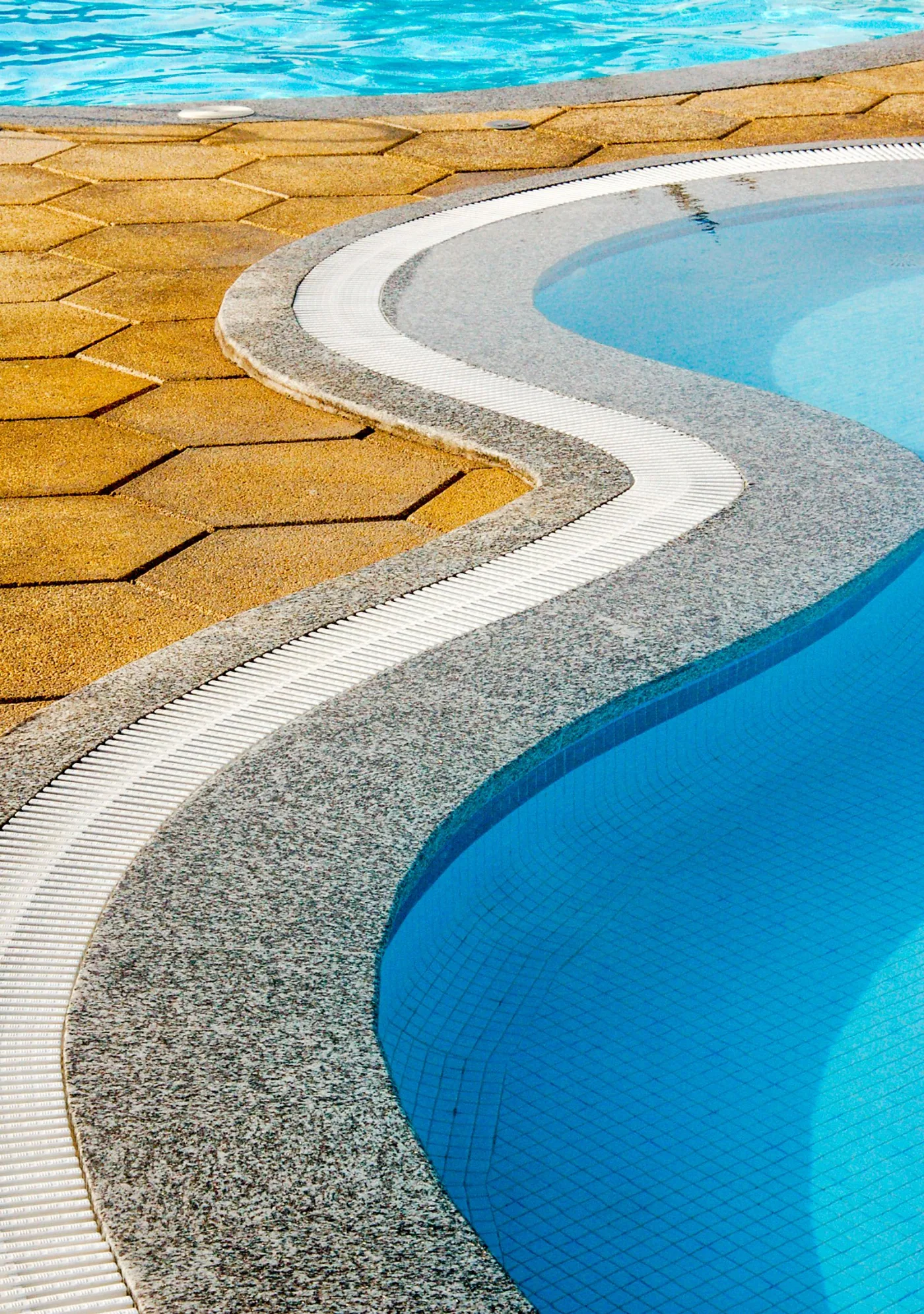
Salt pool downsides most people miss
- pH keeps rising. Salt pools push pH up, so you'll add muriatic acid often. Keeping total alkalinity around 60–80 ppm slows the drift. See how to lower pH in a pool.
- The cell scales up. Calcium builds up on the cell plates, especially when pH and hardness are high, and it cuts chlorine output. See how to reduce calcium hardness.
- You need more stabilizer. Salt pools usually run CYA at 60–80 ppm, and free chlorine has to rise with it, to 5–8 ppm. See what should the chlorine level be in a pool.
- Bonding matters. The Indiana Department of Health warns that pools with electrolytic chlorinators need proper bonding and grounding. Without it, stray current can damage ladders, railings and heaters.
- Salt on the deck. Splashed water evaporates and leaves salt behind. Rinse the deck and coping regularly.
- You still need shock sometimes. After a party or heavy rain, the cell may not keep up. Use "boost" mode or add liquid chlorine.
How to convert a chlorine pool to salt water
- Check your equipment. Make sure your heater, pump, ladders, lights and deck are rated for salt. Choose a generator sized for more than your pool's volume (many owners pick 1.5 times their gallons) and certified to NSF/ANSI 50.
- Balance the water first:
- pH 7.2–7.6;
- alkalinity 60–80 ppm;
- calcium 200–400 ppm (plaster);
- CYA raised to 60–80 ppm. The pool stabilizer calculator gives the dose.
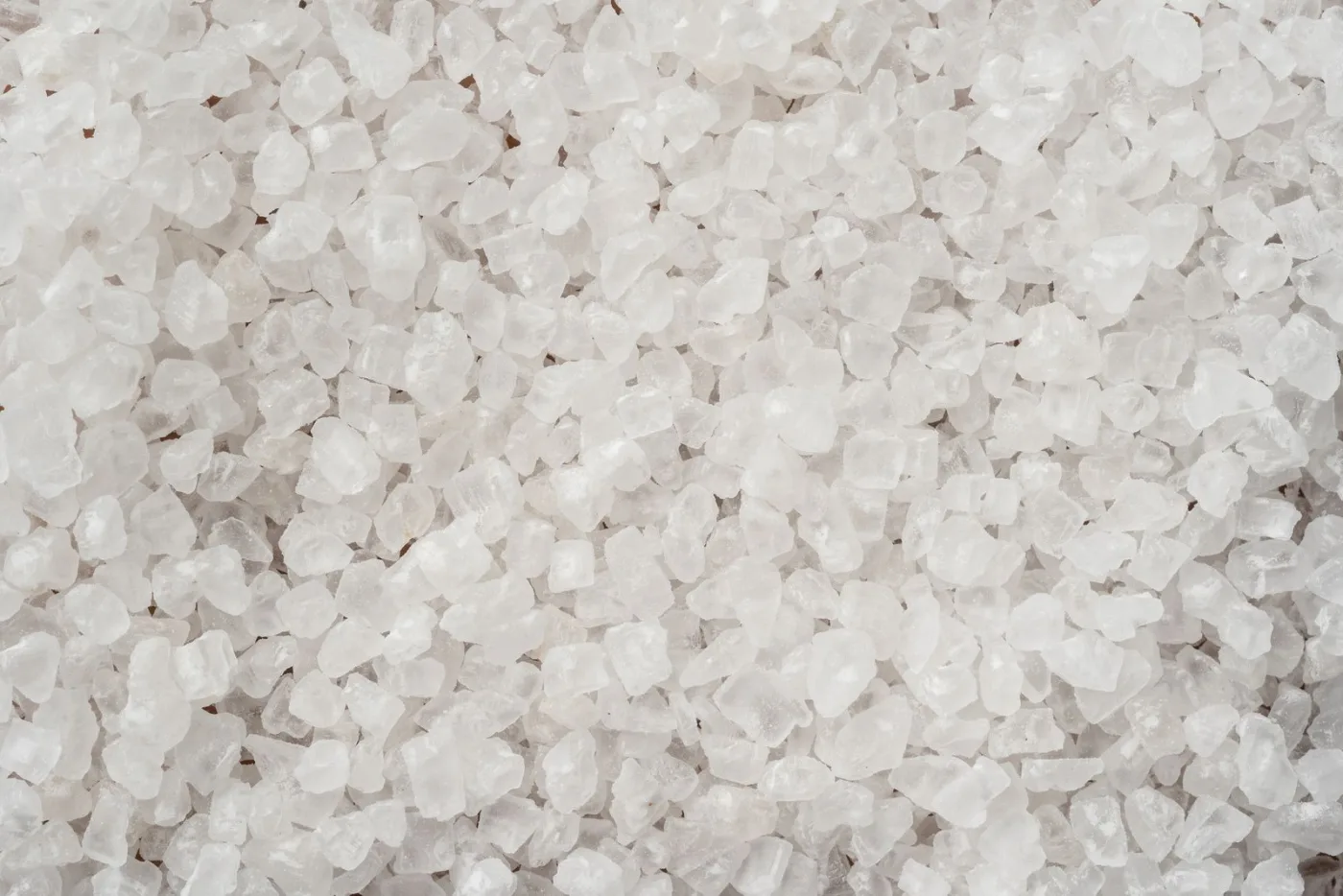
- Add salt. Use pure pool salt (99%+ sodium chloride, no anti-caking agents). Going from 0 to 3,200 ppm in 20,000 gallons takes about 534 lb, roughly 13–14 bags of 40 lb. Old chlorine pools often already have some salt, so test first and use the pool salt calculator.
- Brush and circulate. Pour salt around the shallow end, brush it until it dissolves, and run the pump for 24 hours before turning the cell on.
- Install the cell after the filter and heater, and have an electrician wire and bond the system.
- Set the output. Start at about 50% and adjust until free chlorine holds steady in your target range.
Maintaining a salt water pool
- Test free chlorine and pH 2–3 times a week. Add acid as pH rises.
- Test salt monthly and after heavy rain; most cells want 2,700–3,400 ppm.
- Inspect the cell every 1–3 months. Clean it only when you see scale, because acid washing too often shortens its life.
- Test CYA, alkalinity and calcium monthly.
- Rinse the deck, coping and furniture of salt spray.
Frequently asked questions
Is a salt water pool better than a chlorine pool?
Not in every way. Salt pools keep chlorine steadier, need less handling of chemicals and feel softer. Chlorine pools cost less upfront and are safer for natural stone and older equipment. Both sanitize with the same chlorine.
Is a salt water pool chlorine-free?
No. A salt cell makes chlorine from salt. Free chlorine levels are usually similar to, or a little higher than, a chlorine pool's.
How salty is a salt water pool?
About 3,200 ppm, roughly one-tenth as salty as seawater (about 35,000 ppm). Most people can barely taste it.
Is a salt water pool cheaper to maintain?
Usually it's somewhat cheaper to run, but the generator costs $1,500–$2,500 up front and the cell needs replacing every few years. In our example it saved about $150 a year.
Can you convert any chlorine pool to salt water?
Most in-ground pools can be converted. Check that your heater, metal parts and deck are salt-safe, and that local rules allow draining salt water. Some above-ground pools with metal walls aren't suitable.
Do salt water pools still need shock?
Sometimes. After heavy use, a storm or an algae start, use the cell's boost mode or add liquid chlorine to reach shock level quickly.
The bottom line
- A salt pool is a self-chlorinating chlorine pool.
- Choose salt for convenience, steady chlorine and softer water, and expect a higher upfront cost and more acid.
- Choose traditional chlorine for the lowest upfront cost, natural stone decks or older metal equipment.
- Either way, the water chemistry targets are the same: test regularly and keep pH and stabilizer in range.
Check your numbers with the free all-in-one pool calculator.
Sources
- Indiana State Department of Health, Salt Chlorine Generators for Public and Semi-Public Swimming Pools: salt is not a disinfectant; bonding and grounding; hydrogen venting; deck wash-down; water balance targets. https://www.in.gov/health/eph/files/Salt_Chlorine_generation_pools.pdf
- Los Angeles County Department of Public Health, Installation of Chlorine Generators on Public Pools: NSF/ANSI 50 and UL listing; automatic shut-off without flow. https://admin.publichealth.lacounty.gov/eh/docs/inspection/public-pool-installation-chlorine-generators.pdf
- CDC, Home Pool and Hot Tub Water Treatment and Testing: free chlorine and pH targets for any chlorinated pool. https://www.cdc.gov/healthy-swimming/about/home-pool-and-hot-tub-water-treatment-and-testing.html
- NOAA, Why is the ocean salty?: average seawater salinity about 3.5% (35 parts per thousand). https://oceanservice.noaa.gov/facts/whysalty.html

What do you think?
Share your experience, ask a question, or help another reader.
Loading comments…