
Can Dogs Swim in Chlorine Pools?
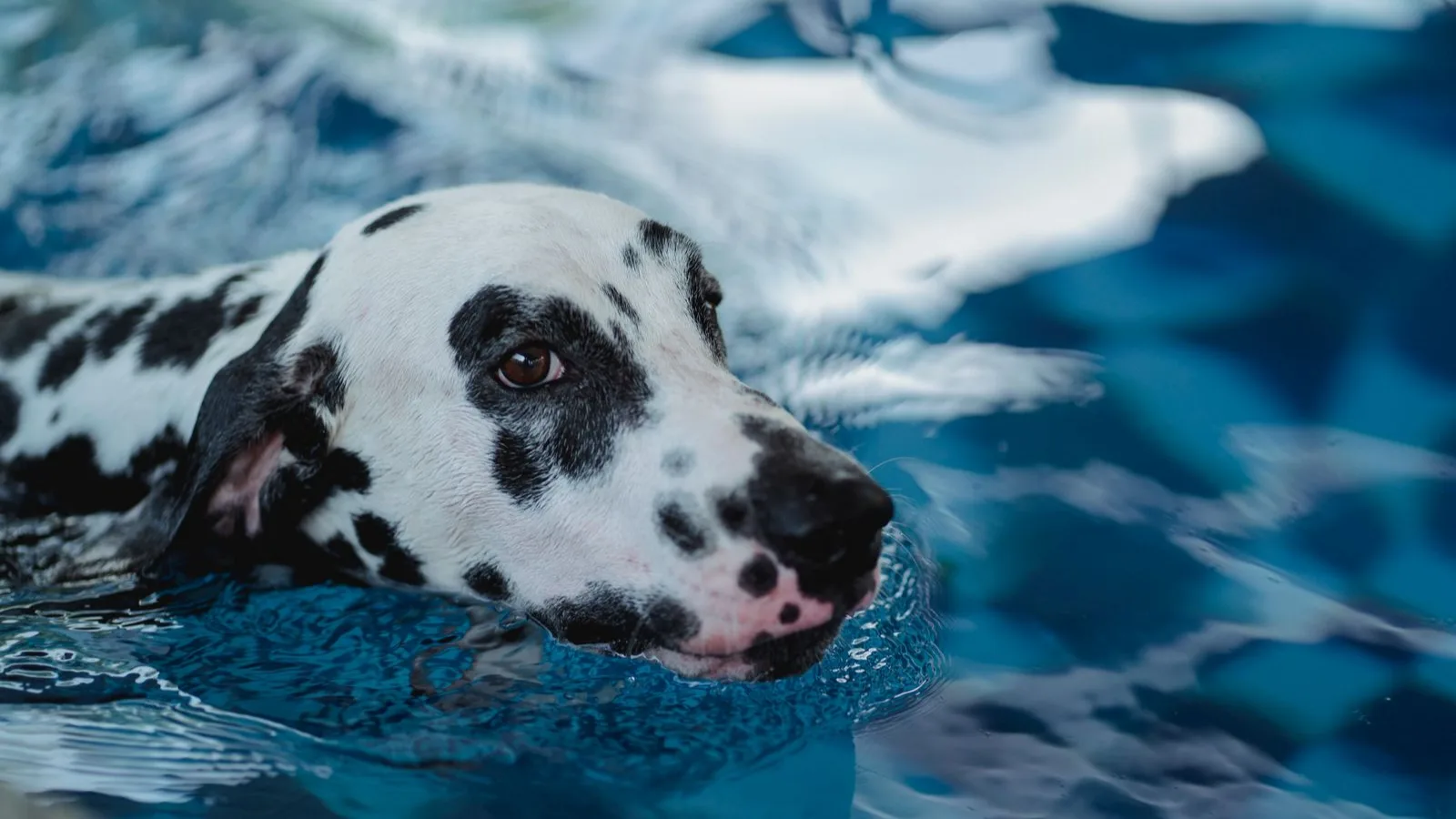
Yes. Most healthy dogs can safely swim in a properly balanced chlorine pool. At normal levels (about 1–4 ppm free chlorine, pH 7.2–7.8), pool water is far too dilute to poison a dog. Veterinarians at Texas A&M note it is "usually not strong enough to cause harm." The real dangers are concentrated chlorine products, drowning, and a dog drinking lots of pool water. Rinse your dog afterwards, and expect to clean the skimmer and add a little chlorine.
Quick checklist: dogs in the pool
- Test first: free chlorine 1–4 ppm and pH 7.2–7.8. Never let a dog in right after shocking.
- Lock up chemicals: tablets, shock and liquid chlorine are the real poisoning risk.
- Supervise every swim, and teach your dog where the steps are.
- Offer fresh water so your dog doesn't drink from the pool.
- Rinse and dry ears after swimming.
- Afterwards: empty the skimmer basket, check the filter and retest chlorine.
Is chlorine safe for dogs?
At normal levels, yes. A pool at 1–4 ppm free chlorine holds only 1–4 parts chlorine per million parts water. It can still:
- irritate eyes and skin, especially if pH is off or chloramines (used-up chlorine) are high;
- dry out the coat and skin with frequent swims;
- lead to ear infections, when water stays trapped in floppy ears.
When not to let your dog swim:
- Right after shocking. Wait until free chlorine falls to 4 ppm or lower; that's the swim limit on most chlorine product labels, and a sensible limit for dogs too. See how long after adding chlorine you can swim.
- When the water is green, cloudy or untested. Low chlorine lets germs and algae grow.
- Right after adding acid or other chemicals, until they've mixed and pH is back in range.
The real poisoning risk is concentrated chlorine. A dog that chews a chlorine tablet, licks spilled shock granules, or knocks over a jug of liquid chlorine can suffer burns to the mouth, throat, stomach, eyes and skin. Store pool chemicals in a locked shed or high shelf. If your dog gets into them, call your veterinarian or an animal poison control line right away.
What if my dog drinks pool water?
A few laps of balanced pool water usually do no harm. Drinking a lot can upset the stomach and cause vomiting or diarrhea. To prevent it:
- Keep a bowl of fresh water by the pool, and take breaks so your dog isn't overheated and thirsty.
- Stop the habit early with a firm "leave it."
- Call your vet if vomiting or diarrhea keeps going, or your dog seems weak or won't eat.
Keeping your dog safe in and around the pool
- Not every dog can swim. Short-nosed, deep-chested and heavy breeds (bulldogs, pugs, basset hounds, dachshunds) tire quickly or sink. Use a dog life jacket for weak swimmers and puppies.
- Teach the exit. Dogs can't climb ladders. Guide your dog to the steps from the water several times, or add a pet ramp.
- Never leave a dog alone with the pool. A fence, a pool alarm, or a solid safety cover (not a soft solar cover a dog can fall through) prevents drowning.
- Watch for tiredness. Dogs will keep fetching until they're exhausted. Keep sessions short.
- Rinse with fresh water after swimming, and dry the ears and skin folds.
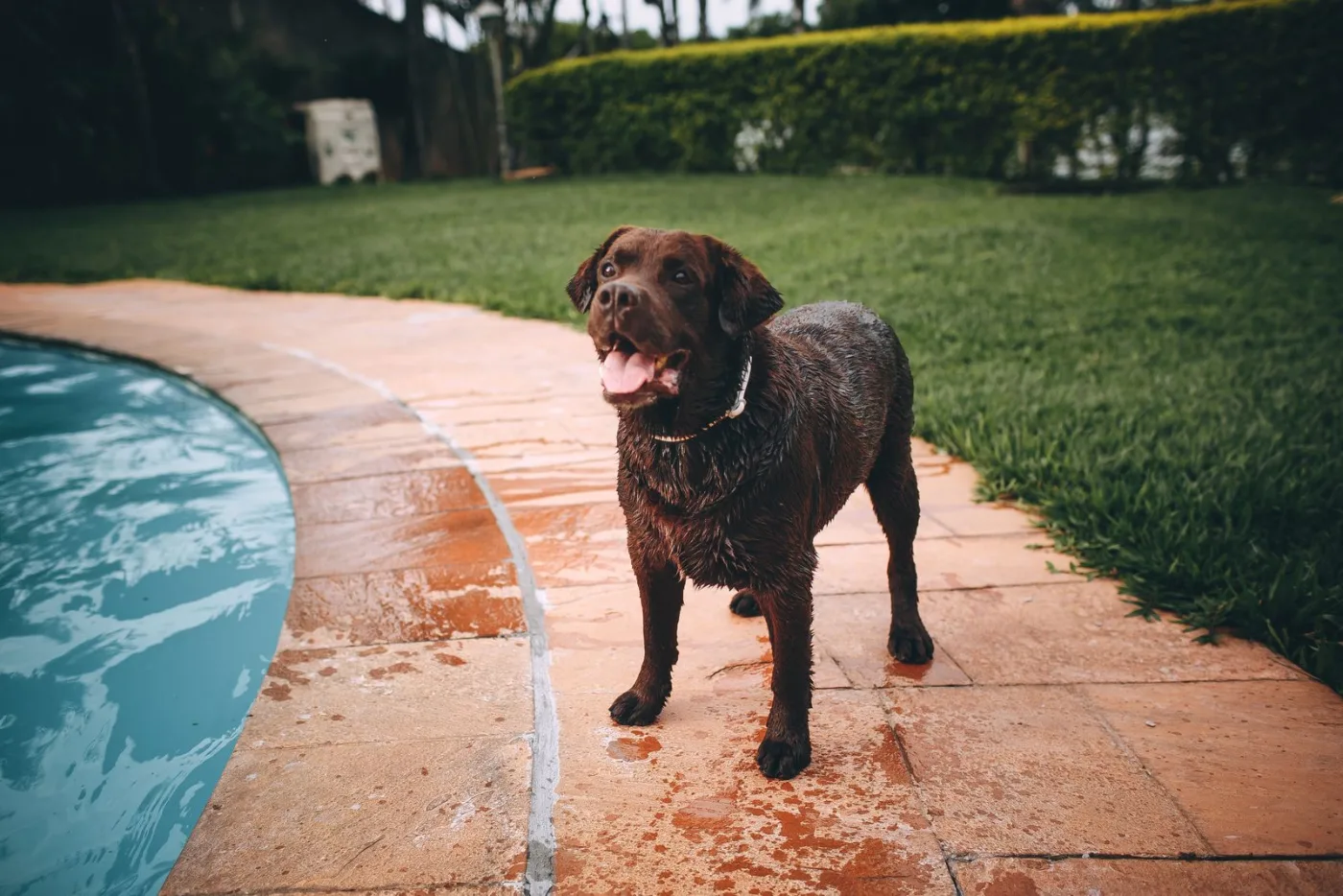
Can dogs swim in salt water pools?
Yes, with the same precautions. A salt water pool is still a chlorine pool, just with chlorine made by a salt cell. It holds about 3,200 ppm salt, roughly a tenth as salty as seawater. Still:
- Don't let dogs drink it. Too much salt water can cause vomiting and, in large amounts, salt poisoning.
- Ask your vet first if your dog has heart or kidney disease or is on a low-sodium diet.
More on how salt pools work: salt water pool vs chlorine pool.
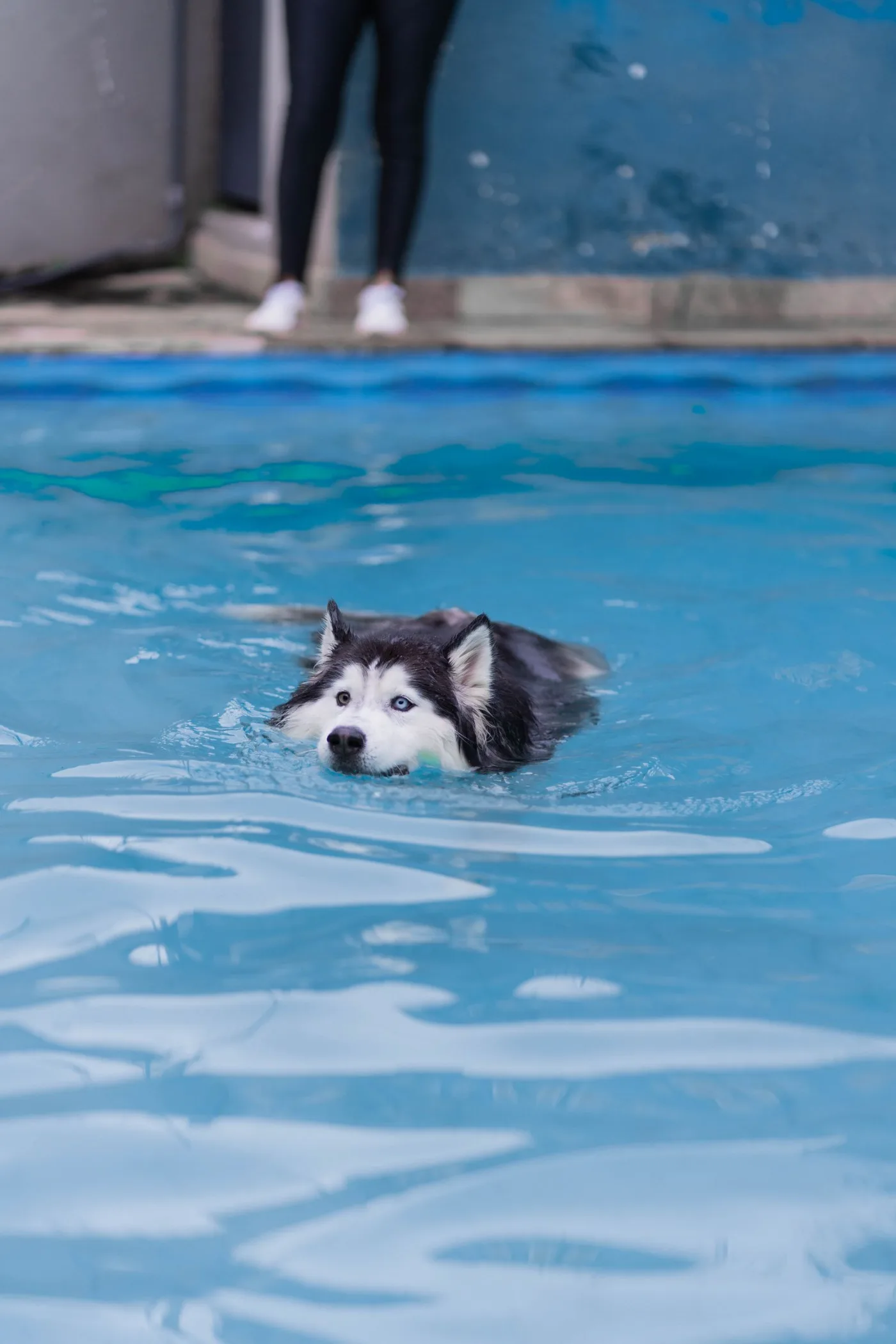
What dogs do to your pool, and how to handle it
A dog brings much more hair, dirt, oils and bacteria into the water than a person does:
- Hair clogs the skimmer, pump basket and filter. Empty baskets after every dog swim. Clean or backwash the filter sooner than usual.
- Chlorine gets used up faster. Dirt and oils consume free chlorine and create chloramines. Test after a swim and top up, or shock at night after a busy day. The pool chlorine calculator gives the dose.
- Claws can scratch or puncture vinyl liners. Trim nails, and keep dogs off vinyl steps if they scrabble. Plaster and fiberglass hold up better.
- Germs can pass to people. Iowa's public pool guidance lists infections that can spread from dogs to people in shared water, including Giardia, Cryptosporidium, Campylobacter and Leptospira. Hose your dog off before swimming, and keep a sick dog or one with diarrhea out of the pool.
Tip: if people and dogs share the pool, let the dog swim last, then clean and chlorinate before the next human swim.
What to do if your dog poops in the pool
The CDC lists animal waste and body fluids as the most common pool contaminants.
- Get everyone out. Remove the poop with a net or bucket. Don't vacuum it, which spreads it through the filter.
- Formed stool: raise free chlorine to at least 2 ppm with pH at 7.5 or lower, and keep the pump running at least 25 minutes before anyone swims.
- Diarrhea: this is a high-risk event for Crypto, which resists normal chlorine. Follow the CDC's full fecal-incident steps, which call for much higher chlorine for many hours, then backwash or clean the filter.
- Clean the net and anything else that touched the waste.
Example: a Labrador in a vinyl pool
- The pool: the Parkers have a 15,000-gallon vinyl pool, and Buddy, their 70-lb Labrador, swims every Saturday.
- Before: they test (FC 3 ppm, pH 7.5), hose Buddy off, and put his water bowl in the shade.
- During: they keep swims to 15–20 minutes and guide him back to the steps each time.
- After: they rinse Buddy and dry his ears. In the pool, they empty a skimmer basket full of fur and retest: FC has dropped to 1.5 ppm.
- The fix: they add about 30 fl oz of 10% liquid chlorine to get back to 3 ppm, and clean the cartridge filter every 2 weeks instead of every month.
(The Parkers are an illustrative example; the chlorine dose comes from the Pool Care chlorine calculator.)
Frequently asked questions
Can dogs swim in chlorine pools?
Yes. A properly balanced pool (1–4 ppm free chlorine, pH 7.2–7.8) is safe for most healthy dogs. Supervise them, keep chemicals locked away, and rinse your dog afterwards.
Is pool chlorine bad for dogs' skin?
It can dry the coat and irritate sensitive skin and eyes, especially if pH or chloramines are off. Rinse with fresh water after each swim. Ask your vet about dogs with skin conditions.
What happens if a dog drinks pool water?
A little is usually harmless. A lot can cause vomiting or diarrhea. Provide fresh water and call your vet if symptoms continue.
Will my dog ruin my pool filter?
Dog hair clogs skimmers, pump baskets and filters quickly. Empty the baskets after every swim and clean or backwash the filter more often.
How soon after shocking can my dog swim?
Wait until free chlorine has dropped to 4 ppm or lower and pH is 7.2–7.8. That's usually overnight to a day or more.
Can dogs scratch a vinyl pool liner?
Yes. Claws can scratch or tear vinyl, especially on steps. Trim nails, and add a pet ramp or step mat.
The bottom line
- Dogs can swim in a well-kept chlorine or salt pool.
- Keep chlorine at 1–4 ppm and pH at 7.2–7.8, and never let a dog in right after shocking.
- Lock up concentrated chemicals, supervise every swim, and give your dog fresh water.
- Afterwards, rinse your dog, empty the baskets, and top up chlorine.
Sources
- Texas A&M College of Veterinary Medicine & Biomedical Sciences, Pet Talk: Tips for taking dogs swimming (2022). https://vetmed.tamu.edu/news/pet-talk/taking-dogs-swimming/
- CDC, Responding to Pool Contamination (updated 2025): animals and body fluids are the most common contaminants; Cryptosporidium and Giardia. https://www.cdc.gov/healthy-swimming/response/
- Iowa Department of Inspections, Appeals and Licensing, Dog Swims guidance (2019): disease risks from dogs and hosing dogs off before entry. https://dial.iowa.gov/media/8418/download
- US EPA, registered pool shock label (EPA Reg. No. 101928-1): reentry prohibited above 4 ppm chlorine. https://www3.epa.gov/pesticides/chem_search/ppls/101928-00001-20230711.pdf

What do you think?
Share your experience, ask a question, or help another reader.
Loading comments…