
Does Pool Chlorine Go Bad?
Yes, but it depends on the type.
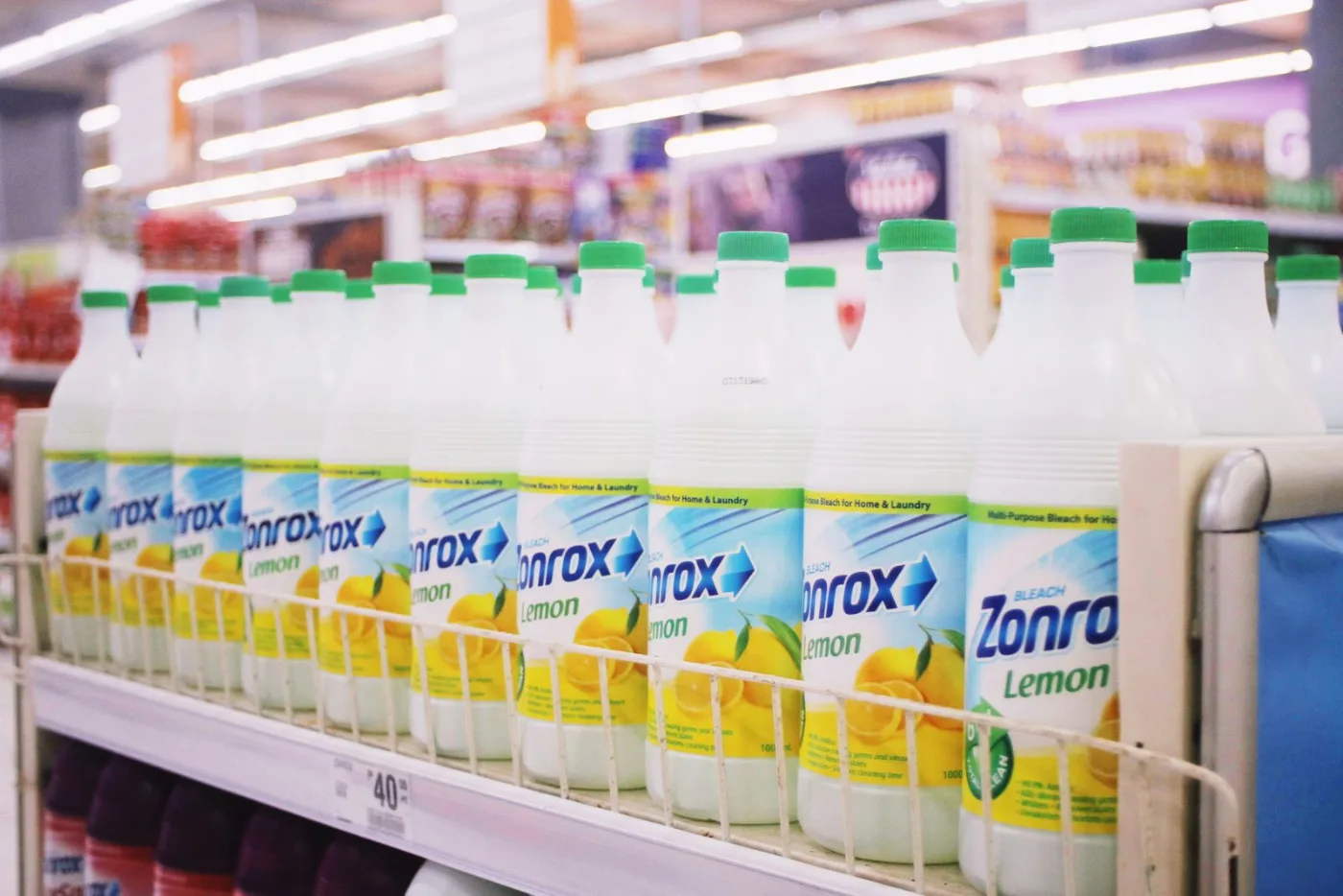
- Liquid chlorine and bleach (sodium hypochlorite) slowly break down into salt and water. They lose strength month by month, and much faster in a hot garage or in sunlight.
- Tablets and granular shock stay strong for years if they're kept dry and sealed.
Old liquid chlorine isn't dangerous to use; it's just weaker, so you need more of it. A simple bucket test shows how strong it still is.
Quick answer: pool chemical shelf life (stored cool, dry and sealed)
| Product | Rough shelf life | What happens with age |
|---|---|---|
| Liquid chlorine (10–12.5%) | Best used within one season; loses strength over weeks to months | Gets weaker, faster when hot |
| Household bleach (6–8.25%) | Around 6–12 months | Gets weaker, more slowly than pool chlorine |
| Trichlor tablets | Several years if dry | Crumble or swell if damp |
| Cal-hypo shock | Several years if sealed and dry | Clumps and weakens with moisture |
| Dichlor shock | Several years if dry | Clumps with moisture |
| Non-chlorine shock (MPS) | 1–2 years | Clumps and weakens |
| Muriatic acid, baking soda, soda ash, stabilizer | Don't expire | Keep sealed and dry |
| Algaecide, clarifier, enzymes | Check the label (often 1–3 years) | May separate or lose effect |
Why liquid chlorine weakens
Liquid pool chlorine and bleach are sodium hypochlorite in water. Hypochlorite slowly decomposes into salt and oxygen-containing byproducts. Chemists have measured how the rate rises with:
- Heat: the rate roughly doubles to quadruples for every 10°C (18°F) rise. A jug in a 100°F garage weakens many times faster than one in a cool basement.
- Strength: stronger solutions break down faster. That's why 12.5% pool chlorine weakens faster than 6% bleach.
- Sunlight: UV light speeds it up even more.
- Metals and dirt: contamination speeds it up.
EPA-registered sodium hypochlorite labels say this directly: the product "degrades with age and exposure to sunlight and heat," so test your water and increase the dose as needed.
Dry chlorine (tablets and granules) keeps better because there's no water for the reaction. Moisture is what ruins it: tablets swell and crumble, and shock turns into hard clumps.
Signs your chlorine has gone bad
- Liquid chlorine: the usual dose raises free chlorine much less than expected. The color fades from pale yellow toward clear, and the smell is weaker.
- Tablets: they're soft, swollen or crumbling, or the bucket is full of dust.
- Shock: it has turned into hard lumps, or the bag is damp.
- Any product: it's past the manufacturer's best-by date, or the container is bulging or leaking.
Test old liquid chlorine with a bucket
This takes 10 minutes and tells you the real strength:
- Fill a clean bucket with exactly 5 gallons of tap water and test its free chlorine (FC). Write it down; it's often 0.
- Add exactly 1 mL of the liquid chlorine, measured with a medicine syringe. Stir well.
- Test free chlorine again. For fresh 12.5% chlorine, 1 mL in 5 gallons raises FC by about 6.6 ppm; for 10%, by about 5.3 ppm.
- Calculate the real strength: strength (%) = (FC rise ÷ 6.6) × 12.5.
| FC rise in the bucket | Real strength | Dose multiplier (vs fresh 12.5%) |
|---|---|---|
| 6.6 ppm | 12.5% | 1.0× |
| 5.3 ppm | 10% | 1.25× |
| 4.2 ppm | 8% | 1.6× |
| 2.6 ppm | 5% | 2.5× |
Then enter the real strength in the pool chlorine calculator so your dose is right.

Example: last summer's liquid chlorine
- The find: Ken finds two unopened jugs of 12.5% liquid chlorine in his garage, bought last June.
- The bucket test: FC rises by 4.2 ppm instead of 6.6 ppm, so the chlorine is now about 8%.
- The dose: his 15,000-gallon pool needs +3 ppm. With fresh 12.5% chlorine that would be about 46 fl oz; at 8% it takes about 72 fl oz.
- The result: he uses up the old jugs first and buys fresh chlorine in smaller amounts through the season.
(Ken is an illustrative example; doses come from the Pool Care chlorine calculator.)
How to store pool chemicals so they last
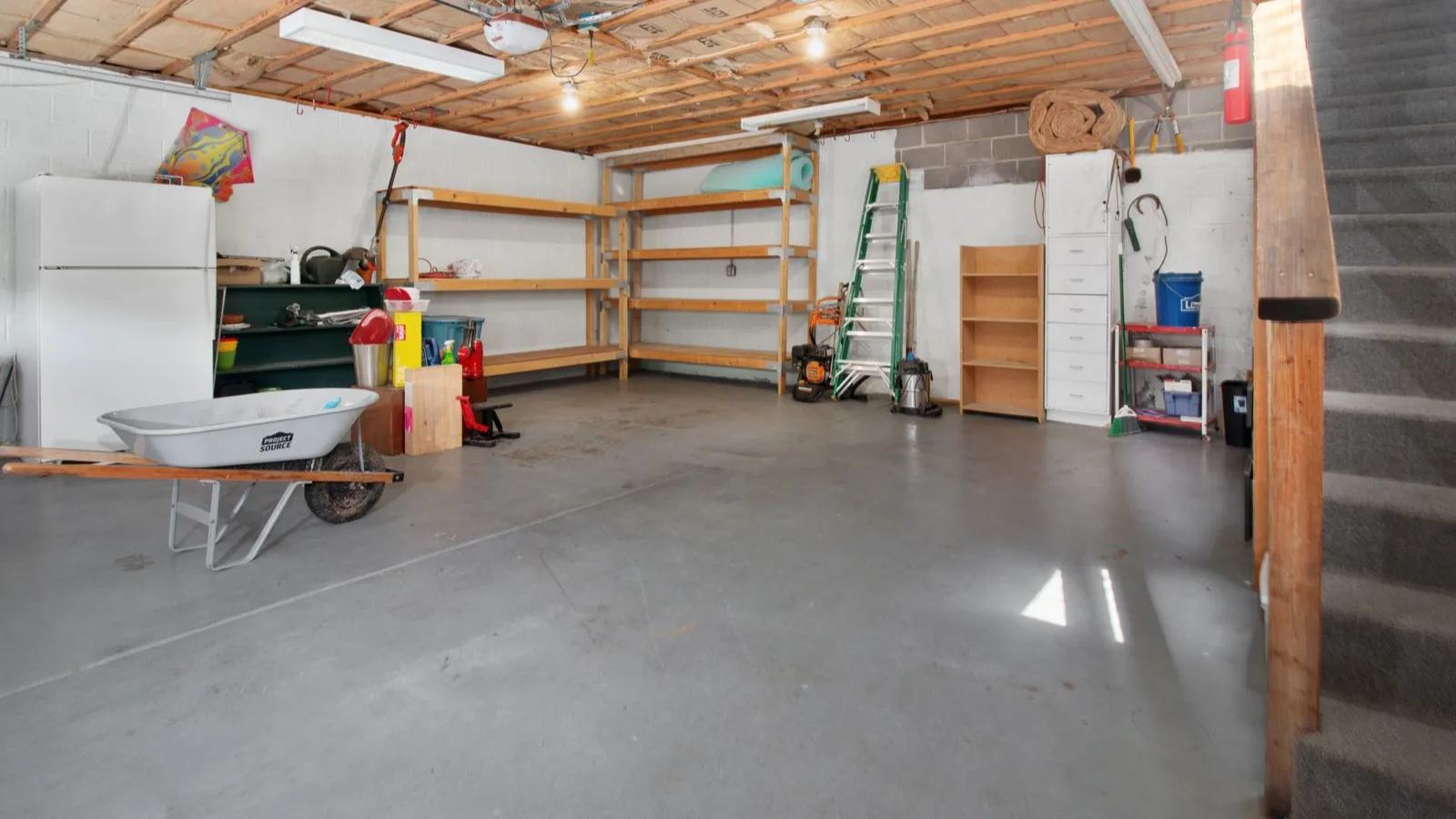
- Cool, dry and dark: a ventilated shed or basement, not a hot garage or direct sun.
- Keep lids tight, and store everything in the original container with its label.
- Keep chlorine away from acid, and never stack them together. Mixing chlorine with acid or with other chlorine types can release toxic gas or start a fire. The CDC links thousands of emergency-room visits each year to pool chemical injuries.
- Keep them off the floor and out of reach of children and pets.
- Buy liquid chlorine in amounts you'll use in a few weeks. Tablets and shock can be bought in bulk if you can keep them dry.
How to get rid of old pool chemicals
- Weak liquid chlorine: it's still chlorine. Use it up in the pool at a higher dose.
- Damp or clumped shock and tablets: if they still dissolve and raise chlorine, use them. Otherwise, take them to a household hazardous waste site.
- Never put pool chemicals in household trash if they're wet or the container is damaged, and never pour different chemicals together to "use them up."
Frequently asked questions
Does pool chlorine expire?
Liquid chlorine slowly loses strength, so plan to use it within a season. Dry tablets and shock last several years if kept sealed and dry. Check the manufacturer's best-by date.
Can I use last year's pool chlorine?
Yes. Tablets and shock are usually fine if dry. Liquid chlorine will be weaker, so do a bucket test and adjust your dose.
Do chlorine tablets go bad?
Not quickly. Trichlor tablets keep for years if dry. Moisture makes them crumble and gas off, so keep the lid tight.
Does pool shock go bad?
Granular shock lasts years in a sealed, dry bag. Once it's damp or clumped, it weakens. Non-chlorine shock usually lasts 1–2 years.
How long does liquid chlorine last once opened?
Opening matters less than temperature. Kept cool and capped, it stays usable for months; in a hot garage it can lose a large share of its strength within weeks.
Is expired chlorine dangerous?
Weak chlorine isn't more dangerous, just less effective. Damaged or wet containers can leak or react, so handle them carefully and never mix chemicals.
The bottom line
- Liquid chlorine and bleach weaken with time and heat; tablets and shock last years if dry.
- Store chemicals cool, dry, sealed and apart from acid.
- Use a 5-gallon bucket test to measure old liquid chlorine, then adjust your dose.
Sources
- US EPA, registered label, HYPO 5.25 sodium hypochlorite (EPA Reg. No. 49927-5): "degrades with age and exposure to sunlight and heat"; test and increase dosage as needed. https://www3.epa.gov/pesticides/chem_search/ppls/049927-00005-20200218.pdf
- Adam LC, Gordon G, Hypochlorite Ion Decomposition: Effects of Temperature, Ionic Strength, and Chloride Ion, Inorganic Chemistry, 1999. https://pubmed.ncbi.nlm.nih.gov/11670917/
- CDC, Pool Chemical–Associated Health Events, MMWR 68(19), 2019. https://www.cdc.gov/mmwr/volumes/68/wr/mm6819a2.htm

What do you think?
Share your experience, ask a question, or help another reader.
Loading comments…