
Can You Add Chlorine to a Salt Water Pool?
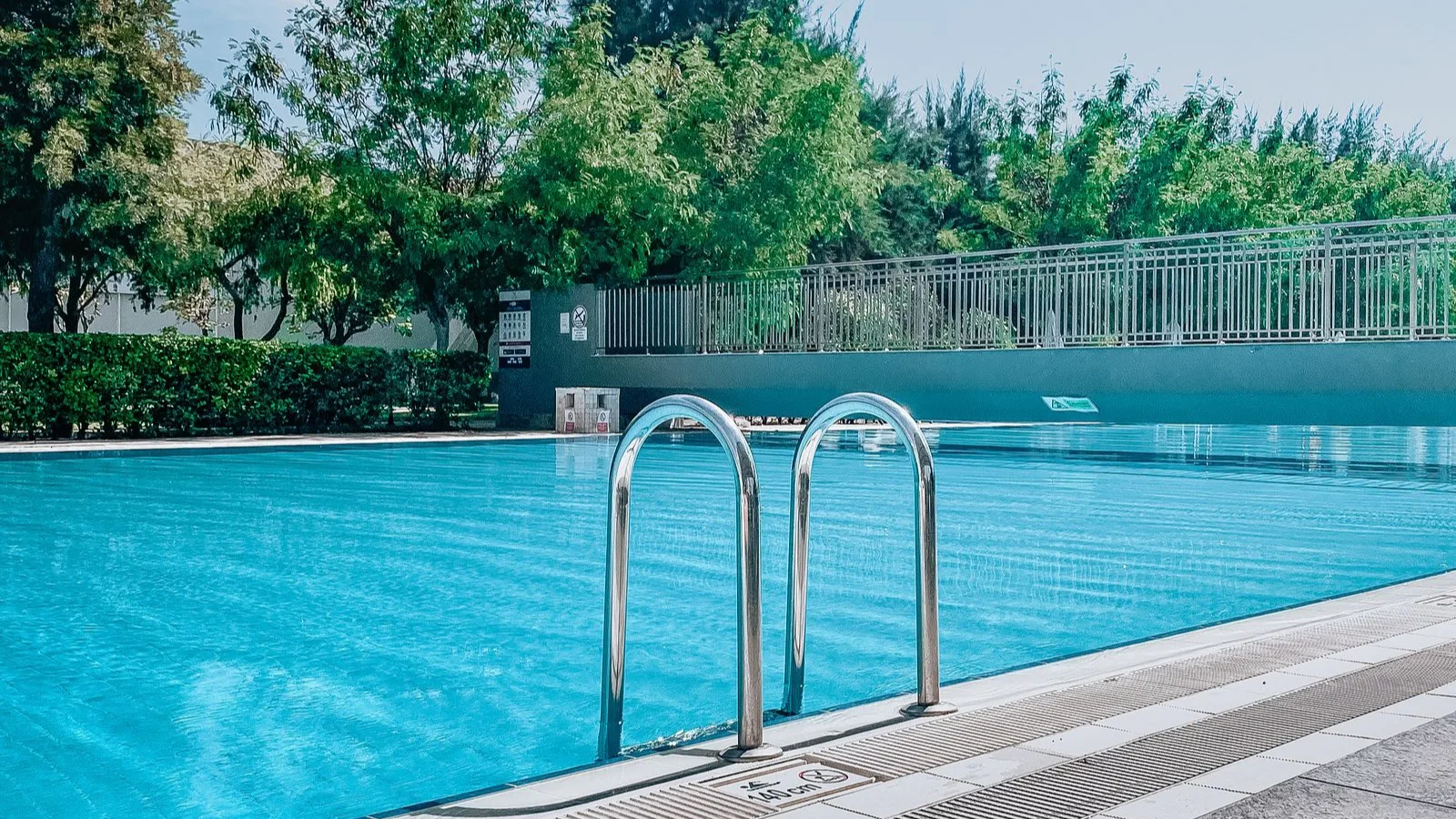
Yes. A salt water pool is a chlorine pool: the salt cell turns dissolved salt into chlorine, so adding chlorine by hand is completely safe. You can add it to boost low levels or to shock.
- Best choice: liquid chlorine (or plain bleach). It's the same chemical the cell makes and leaves nothing behind but a little salt.
- Avoid: calcium hypochlorite (cal-hypo) shock, which leaves calcium that scales the salt cell, and regular chlorine tablets, which keep raising stabilizer and lowering pH.
Quick answer
- Safe to add chlorine to a salt pool? Yes.
- Best product: liquid chlorine or plain unscented bleach.
- OK now and then: dichlor shock (it adds some stabilizer).
- Avoid: cal-hypo shock and routine trichlor tablets.
- Swim when: free chlorine is 4 ppm or lower and pH is 7.2–7.8.
Which chlorine to use in a salt water pool
| Product | Use in a salt pool? | Why |
|---|---|---|
| Liquid chlorine (10–12.5%) | Yes, the best choice | Same chlorine the cell makes; adds only salt |
| Plain household bleach | Yes | Same as liquid chlorine, just weaker |
| Dichlor shock (granular) | Occasionally | Adds about 0.9 ppm stabilizer per 1 ppm chlorine |
| Cal-hypo shock | Avoid | Adds calcium, which scales the cell plates |
| Trichlor tablets | Not for routine use | Raise stabilizer and lower pH; OK as a short-term backup |
| Non-chlorine shock (MPS) | For oxidizing only | Breaks down sweat and oils, but doesn't kill algae |
Salt pools already run stabilizer (cyanuric acid, CYA) on the high side, often 60–80 ppm. Any product that adds more CYA makes chlorine weaker over time, which is why liquid chlorine is the best choice. See salt water pool vs chlorine pool.
When a salt pool needs extra chlorine
A salt cell makes chlorine slowly and only while the pump runs. Add chlorine by hand when:
- Water is cold: many cells stop producing below about 60°F, so the pool can run low in spring and fall.
- Salt is low, or the cell is scaled, worn out or failed. Check the cell and salt level. See how to clean a salt cell.
- After heavy use: a party, heavy rain, or a stretch of hot, sunny days uses chlorine faster than the cell can make it.
- For algae or cloudy water, which need shock levels the cell can't reach quickly.
- When opening the pool in spring, to get chlorine up on day one.
The Indiana Department of Health puts it simply: you don't need to buy chlorine as long as the generator maintains the required level; if it doesn't, you do.
How to add chlorine to a salt water pool
- Test free chlorine, pH and stabilizer (CYA).
- Adjust pH to 7.2–7.6 first. Salt pools drift high, and chlorine works poorly above 7.8.
- Work out the dose with the pool chlorine calculator: your target for a boost, or shock level (at least 10 ppm, or 40% of CYA). The pool shock calculator gives shock doses.
- Pour liquid chlorine slowly in front of a return jet with the pump running. Don't pour it into the skimmer.
- Run the pump for several hours and retest.
- Swim when free chlorine is back to 4 ppm or lower, the limit on most chlorine product labels.
Never mix chlorine and acid in the same bucket or add them at the same time. Add them at least 30 minutes apart.
Should you turn the salt cell off while shocking?
You don't have to. Extra chlorine from a jug doesn't hurt the cell, and the cell keeps adding a little more. But while chlorine is at shock level there's no need for the cell to run, so many owners set output to 0% until chlorine falls back to normal. That saves cell hours. Turn it back on once free chlorine is in your normal range.
Example: a salt pool that needed help
- The pool: the Patels have an 18,000-gallon salt pool with CYA at 70 ppm.
- Spring, water at 58°F: the cell shows "low temperature" and has stopped making chlorine. Free chlorine is 2 ppm. They add about 55 fl oz of 12.5% liquid chlorine to raise it by 3 ppm, and repeat every couple of days until the water warms up.
- July, after a storm: the water is cloudy. Their shock target is 28 ppm (40% of 70), and free chlorine is 5 ppm. Raising it 23 ppm takes about 3.3 gallons of 12.5% liquid chlorine. They set the cell to 0%, brush, and run the pump overnight.
- Two days later: the water is clear and chlorine is back near 6 ppm. They return the cell to 50%.
(The Patels are an illustrative example; doses come from the Pool Care chlorine calculator.)
Frequently asked questions
Can you put regular chlorine in a salt water pool?
Yes. Liquid chlorine or plain bleach works best. Chlorine tablets work in an emergency, but they raise stabilizer and lower pH over time.
Can you shock a salt water pool?
Yes. Use liquid chlorine to reach shock level, about 40% of your stabilizer level and at least 10 ppm. Avoid cal-hypo, which scales the salt cell.
Will adding chlorine damage my salt cell?
No. Liquid chlorine is the same chemical the cell makes. The calcium in cal-hypo is what can harm the cell, by scaling its plates.
Do salt water pools need chlorine tablets?
No. The cell supplies chlorine. Tablets are only a backup if the cell fails, and only for a short time.
What shock is best for a salt water pool?
Liquid chlorine. Dichlor is fine occasionally. Non-chlorine shock only oxidizes contaminants and won't kill algae.
How long after shocking a salt pool can you swim?
When free chlorine is back to 4 ppm or lower and pH is 7.2–7.8, usually overnight to a day or two.
The bottom line
- Adding chlorine to a salt pool is safe and sometimes necessary.
- Use liquid chlorine or plain bleach. Avoid cal-hypo, and use tablets only as a short-term backup.
- Add chlorine when the water is cold, the salt is low, the cell is weak, or after heavy use and storms.
- Fix pH first, dose by calculator, and swim at 4 ppm or lower.
Sources
- Indiana State Department of Health, Salt Chlorine Generators for Public and Semi-Public Swimming Pools: salt is not the disinfectant; buy chlorine if the generator doesn't maintain required levels; water balance. https://www.in.gov/health/eph/files/Salt_Chlorine_generation_pools.pdf
- US EPA, registered pool shock label (EPA Reg. No. 101928-1): reentry prohibited above 4 ppm chlorine. https://www3.epa.gov/pesticides/chem_search/ppls/101928-00001-20230711.pdf
- CDC, Home Pool and Hot Tub Water Treatment and Testing (2024): minimum free chlorine 1 ppm; pH 7.0–7.8. https://www.cdc.gov/healthy-swimming/about/home-pool-and-hot-tub-water-treatment-and-testing.html

What do you think?
Share your experience, ask a question, or help another reader.
Loading comments…