
How to Drain a Pool Safely
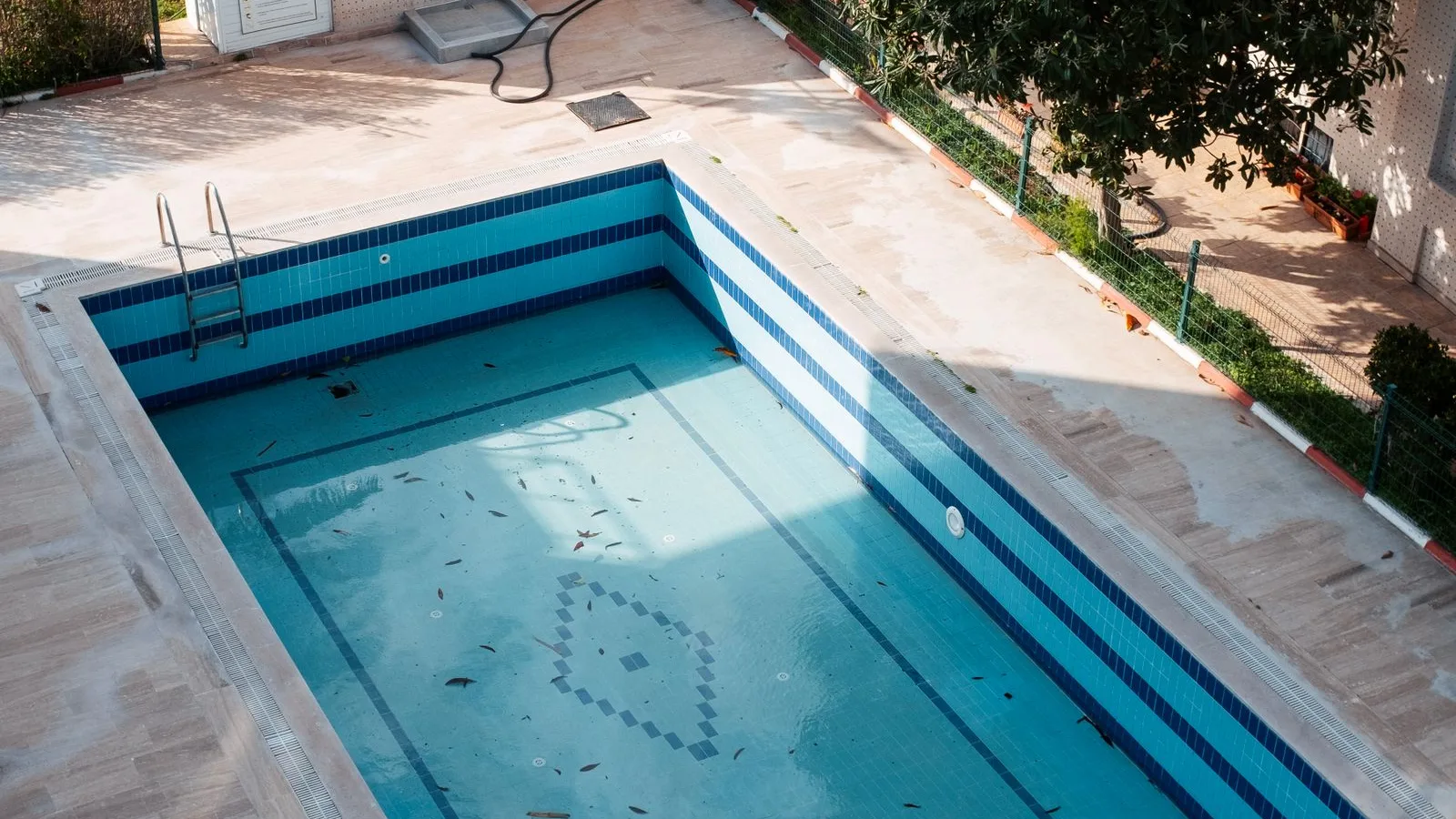
To drain a pool safely:
- Decide whether you really need a full drain; a partial drain is often enough.
- Check your city's rules on where pool water may go.
- Let chlorine drop to zero (or neutralize it), and test it.
- Pump the water out with a submersible pump in dry weather, to your sanitary sewer cleanout or slowly across your own lawn.
Never drain an in-ground pool right after heavy rain or when the water table is high, because groundwater can push an empty pool up out of the ground. Salt water pools should go only to the sanitary sewer.
Quick steps: how to drain a pool
- Check local rules for allowed discharge spots and chlorine limits.
- Stop adding chlorine and wait 3–7 days, or neutralize it. Test until chlorine is 0.
- Turn off the pool equipment at the breaker.
- Set a submersible pump in the deep end, plugged into a GFCI outlet.
- Run the discharge hose to the sewer cleanout or a lawn area where water won't cross to neighbors.
- Watch the pump, and stop before it runs dry. Open hydrostatic relief valves when nearly empty.
- Refill promptly and rebalance the water.
Do you need to drain the pool completely?
Often, no. Many problems only need a partial drain (replacing 20–50% of the water), which keeps the shell or liner covered and is much safer:
| Problem | Partial or full drain? |
|---|---|
| High calcium hardness | Partial, in stages. See how to reduce calcium hardness |
| High stabilizer (CYA) or salt | Partial |
| High total dissolved solids, old water | Partial or full |
| Black algae or stains needing an acid wash | Full (plaster only, by a pro) |
| Resurfacing, tile or structural repairs | Full |
| Swamp pool after a long neglect | Often partial; see why is my pool water green |
The fraction to replace for a reading you need to lower is (current − target) ÷ (current − fill water).
Where to drain pool water
Rules vary by city, so call your local stormwater or utilities office before you drain. Common rules from US city governments:
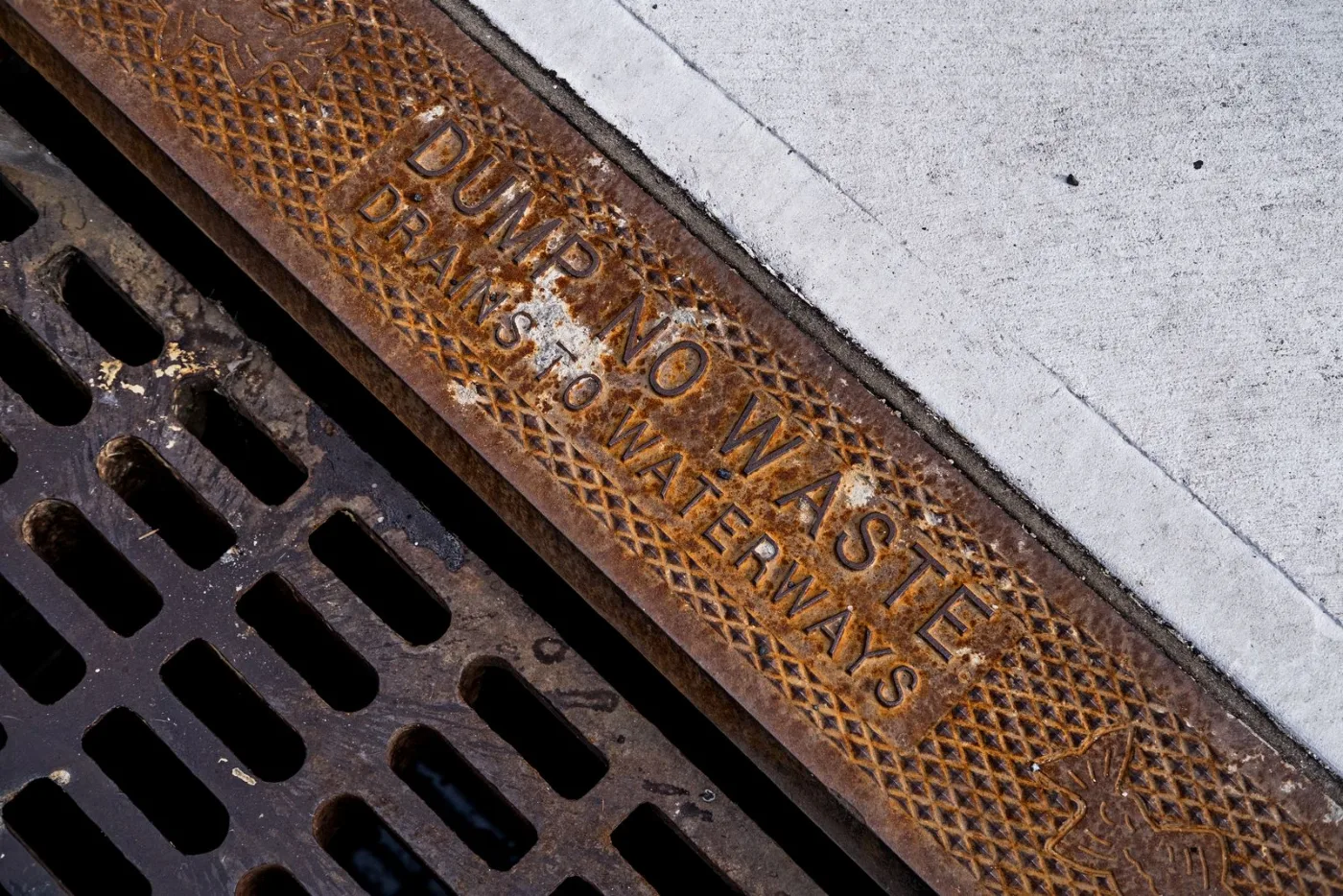
- Storm drains are often off-limits for chlorinated, salty or heated water. Portland and Sacramento prohibit discharging chlorinated pool water to storm drains.
- The sanitary sewer is usually the preferred route. Pump to your home's sewer cleanout, often a capped pipe near the house, at a gentle rate the plumbing can handle. Some cities require permission first.
- Your own lawn or landscaping works where allowed, if you spread the flow so it soaks in and doesn't run onto a neighbor's property or the street.
- Salt water goes to the sanitary sewer only, never to storm drains, streams or plants.
- Chlorine must be essentially zero before water leaves your property. Limits range from 0.1 mg/L (Portland) to zero (Leesburg, VA, which also requires pH 6–9).
How to dechlorinate pool water before draining
- Wait it out: stop adding chlorine, remove tablets, and uncover the pool. Sun and air usually bring chlorine to zero in 3–7 days, faster in hot, sunny weather.
- Neutralize it: sodium thiosulfate works in minutes. The Illinois Department of Public Health's rate is about 2.6 oz per 1 ppm per 10,000 gallons. Add it with the pump running, wait an hour, then test.
- Test before draining: use a DPD test kit or strips, and confirm free and total chlorine read 0 and pH is within your local limit (6–9 is common).
Algaecides, metal sequestrants and other treatments also matter to some cities. If you used them recently, ask before draining. More ways to bring chlorine down: how to lower chlorine in a pool.
How to drain a pool, step by step
- Pick the right day. Choose a dry stretch with mild temperatures. Avoid draining after heavy rain or during a hot, sunny spell; fully exposed plaster can crack or dry out in the sun.
- Turn off the pool equipment at the breaker, including the pump, heater, salt cell and any automation timers, so nothing runs dry.
- Rent or buy a submersible utility pump. Don't use the pool's filter pump; it can lose prime and burn out, and its waste line may be too slow.
- Plug the pump into a GFCI outlet, using a heavy-duty outdoor extension cord if needed. Keep the connection off the ground.
- Lower the pump to the deepest point and run the discharge hose to your approved spot.
- Monitor it. Check every hour or so: move the hose to spread the water, and watch for pooling. Stop if water starts running toward the street or a neighbor.
- Near the bottom: shut the pump off before it runs dry.
- In-ground concrete/plaster: open the hydrostatic relief valve(s) in the main drain to let groundwater pressure equalize. Replace the plugs before refilling.
- Remove the last inches with a wet/dry vacuum if you need it fully dry.
- Do your work quickly, and refill as soon as possible.
Cautions by pool type
| Pool type | Risk when empty | What to do |
|---|---|---|
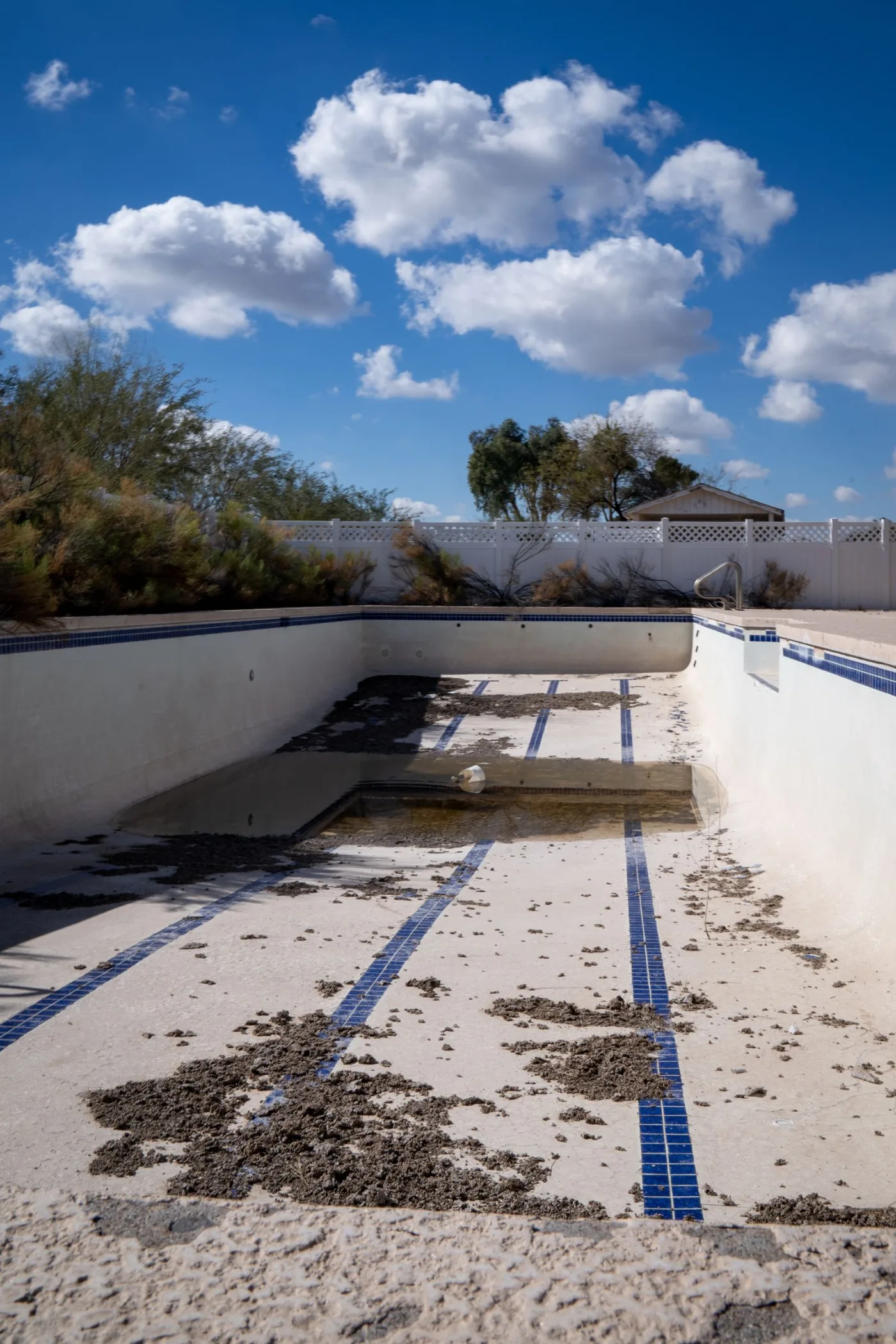
| Plaster / concrete (gunite) | Pool "popping" from groundwater; plaster cracking in sun | Drain in dry weather, use relief valves, refill fast |
| Vinyl liner | Liner shrinks, wrinkles or tears; walls can move | Avoid full drains; keep 1 ft of water in the deep end, or call a pro |
| Fiberglass | Shell can lift or bulge from groundwater | Drain only partially unless a pro supervises |
| Above-ground | Liner shrinkage; wall collapse | Usually only partial drains; follow the maker's guidance |
When in doubt, especially with high groundwater, call a pool professional.
How long does it take to drain a pool? An example
- The pool: the Smiths have a 20,000-gallon plaster pool with calcium hardness at 600 ppm. Their tap water is 100 ppm and the target is 350 ppm.
- How much to drain: (600 − 350) ÷ (600 − 100) = 50%, so 10,000 gallons. They drain it in two rounds so the plaster stays mostly covered.
- Dechlorinating: free chlorine was 3 ppm. That's 2.6 oz × 3 ppm × 2 (for 20,000 gallons) ≈ 16 oz of sodium thiosulfate. Next morning the test reads 0.
- Draining: a rented submersible pump moving about 2,000 gallons an hour, into the sewer cleanout, takes about 2.5 hours per 5,000-gallon round.
- Refilling: a garden hose at about 9 gallons a minute refills 5,000 gallons in roughly 9 hours. Use the pool fill time calculator for your own hose.
(The Smiths are an illustrative example; pump and hose rates vary.)
Refilling and rebalancing
- Refill without stopping once you start. On plaster, a stop leaves a "ring" line.
- Use a hose pre-filter if your water has metals, to help prevent stains.
- Balance the new water: test pH, alkalinity, calcium and stabilizer, then add chlorine. Start with alkalinity, then pH, then calcium, CYA and chlorine. The all-in-one pool calculator gives each dose.
- New water needs stabilizer in outdoor pools: use the pool stabilizer calculator.
Frequently asked questions
Where should I drain my pool water?
Usually to your home's sanitary sewer cleanout, or slowly across your own lawn if your city allows it. Many cities ban chlorinated or salty pool water in storm drains. Check with your local stormwater office.
Can I drain my pool into the street?
Usually not with chlorinated or salt water. Streets lead to storm drains, which flow untreated into creeks. Some cities allow dechlorinated water only, and some require a permit.
How do I dechlorinate my pool before draining?
Stop adding chlorine and let the sun work for 3–7 days, or add sodium thiosulfate, about 2.6 oz per ppm per 10,000 gallons. Test until chlorine reads 0.
Can I use my pool pump to drain the pool?
It's not recommended. A filter pump can lose prime and overheat when the water drops below the skimmer. Use a submersible pump.
Should I drain my pool after heavy rain?
No. Wet ground increases groundwater pressure, which can lift an empty in-ground pool. Lower the level only to mid-skimmer if needed.
How often should a pool be drained?
Rarely: only when calcium, CYA or dissolved solids get too high, or for repairs. Partial drains handle most problems.
The bottom line
- Decide if you need a full drain; partial drains fix most water problems.
- Check your city's rules, and get chlorine to 0 first.
- Use a submersible pump on a GFCI outlet, in dry weather, to the sewer or your own lawn.
- Refill quickly and rebalance the water.
Sources
- City of Portland, Environmental Services, Drain pools and hot tubs: no chlorinated, salt or heated water to storm drains; total residual chlorine 0.1 mg/L or less. https://www.portland.gov/bes/preventing-pollution/prevent-pollution/drain-pools-and-hot-tubs
- City of Sacramento, Pool and Spa Discharge: chlorinated water may not go to storm drains; let chlorine dissipate 3–5 days or dechlorinate; salt water to sanitary sewer only. https://www.cityofsacramento.gov/content/dam/portal/dou/utilities/stormwater/stormwater-quality/documents/Sept2014_poolupdate.pdf
- DC Department of Energy & Environment, How to Drain Your Swimming Pool Properly. https://doee.dc.gov/service/how-drain-your-swimming-pool-properly
- Town of Leesburg, VA, Stormwater Pollution Prevention at Home: chlorine at 0 and pH 6–9 before discharge. https://www.leesburgva.gov/departments/public-works/water-quality-stormwater-management/stormwater-pollution-prevention/at-home/
- Illinois Department of Public Health, Procedure for Hyperchlorination: sodium thiosulfate dose. https://idph.illinois.gov/envhealth/factsheets/Hyperchlorination.htm

What do you think?
Share your experience, ask a question, or help another reader.
Loading comments…